The Heart in Times of the Unknown

Maureen Spengel

This time last year, I was still reeling from the loss of my first “true” love. That once tragic loss, ultimately proved to be the best thing for me; spiritually, physically, emotionally, mentally (and possibly even financially). Through that separation, I gained what is of the utmost importance to me: that is freedom and independence. I live life, and each day, with the intention to find joy in the mundane, to treat others with kindness and consideration, and to appreciate life as if it were a gift that could be taken from me at any moment. If the coronavirus pandemic has taught me anything, it is that life is all too precious, all too precarious, and all too fragile to be diminished under the pressures of our usual futile anxiety and fleeting angst – I am speaking of those unwanted emotions that warp our perceptions toward negativity on an otherwise flawless day – days which we now spent sheltering in place, away from a life that was once so free. Life, as we know it, in all its peculiar manifestations, does not shift into the shapes we insist it should either morph or solidify into. Life is fluid — we either choose to move with it, or to resist it — the more tension we build in attempts to challenge life’s ceaseless pressures, the more the weight of the unknown suffocates our inner spirit. One day, and hopefully soon, the life that we once knew, will feel closer to us than it does now. But that life will be much different, and it will be different in that we will understand just how often our greatest losses prove to be our greatest spiritual gains. As it is through the seemingly insurmountable inner turmoil, that we find the freedom to be.

I Would Like to Report a Murder

August Braddock

Through the act of contacting journalists and the police, the Zodiac Killer taunted and terrified masses of people throughout the 1960s and 1970s. Decades after his final slaying and letter, no one knows who the man that brutally murdered several individuals is — that is, no one but the killer himself. In the 2007 neo-noir film Zodiac, director David Fincher explores the panic, both public and private, that arose in the search for the unknown murderer. In many iconic noir films, one can notice an intense sense of obsession, voyeurism, and paranoia that is rooted in mass panic or fear. This fear could be due to any number of reasons, such as war, the political and/or social climate and movements of the time, the act of women entering the workforce, etcetera. These elements can also be noted in Fincher’s Zodiac, however the root of this public fear is much different. By considering the timeline of Zodiac’s active years, one can evaluate how David Fincher’s Zodiac plays on paranoia rooted in Bay Area history and how, through cinematography and the portrayal of historical events, Zodiac pushes themes of obsession, paranoia, voyeurism, and panic, making it a modern neo-noir.

            The genre of neo-noir includes films that have been released in recent decades that contain elements of canonical film noir. In his text The Philosophy of Neo-Noir, author Mark T. Conard states that elements, such as “inversion of traditional values… and a kind of moral ambivalence” are present throughout iconic works of noir cinema and can also be noted in recent films (Conard, p. 1). Conard claims “the term neo-noir describes any film coming after the classic noir period and contains noir themes and the noir sensibility” and that neo-noirs “contain the same alienation, pessimism, more ambivalence, and disorientation” as classic noir cinema (Conard, p. 2). This classification of different aspects of neo-noir cinema includes elements present in David Fincher’s portrayal of the violence and panic caused by the Zodiac Killer.

            The Zodiac Killer was an active serial murderer who haunted the Bay Area and Northern California throughout the 1960s and early 1970s. Like the Victorian serial killer, Jack the Ripper, the Zodiac Killer expanded the panic his slayings caused by contacting journalists and the police through letters and phone calls. In fact, some claim that the Zodiac Killer is the first serial killer since Jack the Ripper to contact the police and journalists via letter (Graysmith, p. 48).Through the act of contacting not only the police, but the public, the Zodiac Killer created panic and widespread paranoia that was not directly tied to his killings, but the possibility of killings to come.

            The Zodiac Killer created mass panic not only through his actual crimes, but through his desire for public attention. His demand that three different newspapers publish his cyphers, cyphers that he claimed revealed his true identity, brought not only fear, but also a deep interest from the public (Zodiac and Graysmith). Would the killer reveal his true identity in code? In the text Zodiac, Robert Graysmith claims that he became deeply fascinated with the killer and that he “wanted to solve” what he classified as a “great mystery” largely due to the cypher “letter’s strangeness” (Graysmith, p. 48). Graysmith was not the only armchair sleuth intrigued by the killer’s code, as hundreds of ordinary citizens worked to find its hidden meaning. The cypher was eventually decoded by a middle class suburban couple, Donald Gene and Bettye June Harden (Graysmith, p. 54). While the average 21st century individual would be aware of the Zodiac Killer, his actions, and basic knowledge of what defines a serial murderer, those living in the cloud of panic caused by the killer in the 1960s and 1970s had little to no understanding of serial murder. In fact, during the Zodiac’s active years, the term “serial killer” had not even been coined — the Zodiac Killer came before classification.

            Pre-dating the term “serial killer,” the Zodiac Killer is considered one of the first widely known serial killers in the United States. The Zodiac Killer pre-dated the era of the serial killer, which lasted from the mid 1970s through the 1980s (Hickey). Well known killers from the era of the serial killer include Ted Bundy, John Wayne Gacy, Richard Ramirez, Jeffrey Dahmer, Charles Manson, and David Berkowitz (Hickey). All of these men pre-dated criminal profiling, which became widely used by the FBI and law enforcement in the 1990s. This explains why many serial murderers were able to claim so many lives before either being caught by the police or ending their killing sprees.

            It is widely agreed upon that a serial killer is an individual who has killed three or more people over a particular span of time. Unlike mass killers, who kill a large number in a short period of time, often in one spree, serial killers, such as the Zodiac Killer, kill a number of people over an extended period. In his text, Serial Murderers and Their Victims, Eric W. Hickey states that serial killers “may continue to kill for weeks, months, and often years before they are found and stopped — if they are found at all” (Hickey, p. 9). Furthermore, Annalee Newitz, author of Pretend We’re Dead: Capitalist Monsters in American Pop Culture, states “serial killings are characterized by their relative randomness and a lack of any personal connection between the killer and his or her victim” and “serial killer stories are preoccupied with realism” (Newitz, pp. 14-15). In modern representations of the serial killer in mass media, such as cinema, realism is often amplified in order to make an implausible narrative, as any narrative that involves the random killing of any number of individuals feels unnatural to many viewers, feel more real (Newitz). Realism is amplified in order to show the audience that these moments, or the reconstruction of moments, are ones of actuality – it is not just murder presented on the big screen, it is murder that had or could have occurred.

            David Fincher’s 2007 film, Zodiac should be seen as a modern documentary-styled neo-noir while also being a period piece of Northern California in the 1960s and 1970s. Zodiac captures the search for the killer, seen through author Robert Graysmith’s armchair sleuth investigation and the legitimate police investigation handled by David Toschi (Zodiac). When preparing to make the film, Fincher upheld the desire for exact detail, which lead him to spend months interviewing numerous witnesses and reviewing case files (Fincher). The portrayal of killings committed by the Zodiac Killer and the investigations that followed make up David Fincher’s Zodiac. With the help of screenwriter James Vanderbilt, the film presents fact in case where fact and myth have been intertwined for decades.

            Cinematic portrayals of criminals and their crimes are bountiful, yet there is something about Zodiac that sets it apart. Newitz states “…portraits of serial killers in pop culture treat their subjects as real-life monsters, and as a result many of these stories are based in fact or have a pseudo-documentary feel to them” (Newitz, p. 15). This can be noted that the overall experience of Zodiac, despite being a cinematic account on the acts of the Zodiac Killer and the investigations that followed, has a documentary feel to it. This feeling is amplified through the film’s use of title cards that present the viewer with the specific time and place of pivotal moments in the Zodiac Killer’s active years and the investigation that sought to capture him (Zodiac). These title cards also make the film feel as if it is a work of literary detective fiction, as many detective novels begin with time, place, and location in order to set the scene. The unknown killer throughout the film is portrayed as a real-life monster, one that remains hidden. His unknown identity adds to this monstrous feeling of paranoia. Who is Zodiac? He could be anyone.

            The unknown identity of the villain is seen throughout film noir. Throughout iconic noir films from the 1930s through 1950s, there are numerous occasions in which the main character does not know the identity of the person they are chasing until the conclusion of the film. In Otto Preminger’s 1944 film Laura, Detective Mark McPherson must search for the individual who killed Diane Redfern, a model thought to be Laura Hunt (Laura). While McPherson is interacting with suspects throughout the film, all seem suspicious and could be the killer. Neither the audience nor characters within the film know who the killer is until the final moments of the film, where Waldo Lydecker attempts once more to kill the woman he believed he had created (Laura). The unknown identity of the villain is also seen in the film D.O.A, directed by Rudolph Maté in 1949. Protagonist Frank Bigelow, poisoned by an unknown assailant, must find his killer before he dies (D.O.A). Bigelow’s search for his own killer leads him to find that a man he had never personally met has taken his life in order to keep paperwork relating to the sale of a poisonous chemical a secret (D.O.A). Like Bigelow, the audience does not get to see the previously hidden face of his killer until the final moments of the film. The unknown villain and the act of seeking him out is crucial to film noir and it is through the investigation that the audience sees their protagonist be something other than ordinary.

            The unknown identity of the Zodiac Killer is present throughout Fincher’s film. Because there is no set conclusion, the audience is left to wonder who the killer is. While the film presents Arthur Leigh Allen, played by John Carroll Lynch, as the prime suspect, the case ultimately remains open (Zodiac). In fact, Allen has been ruled out as a suspect for the killings due to DNA evidence collected at the site of the San Francisco taxicab killing (Frederick). The film presents this information in the final credits, leaving the once sure viewer conflicted (Zodiac). The film’s representation of Allen makes it seem that it is certain he was the killer, but then the audience is told he could not be. Because the viewer is not presented with the killer’s true identity, they are left in a state of pure paranoia and horror, much like the state of those reacting to the Zodiac’s phone calls to local television stations and letters published in local newspapers during his reign of terror.

            The overwhelming feeling of panic present throughout Zodiac classifies it as neo-noir, all while being a realistic portrayal of how the Bay Area reacted to the knowledge that a serial killer was among them. In the film, this fear is seen through the televised news broadcasts and a number of characters, including Robert Graysmith, played by Jake Gyllenhaal, Paul Avery, played by Robert Downey Jr., and Inspector David Toschi, played by Mark Ruffalo. It is through these men that the audience becomes acquainted with the investigation. Through Graysmith, the audience is shown how someone who had no ties to the police could become so obsessed with a case that it not only destroyed his marriage, but also aided in the discovery of crucial information (Zodiac). By having Detective David Toschi as a supporting character, the audience is able to see how the actual police investigation was going in contrast with what Graysmith was finding on his own. By having both sets of investigations, and the myriad of other investigations occurring in relation to the Zodiac, such as those in Vallejo and Riverside, Fincher shows how the flood of information that came in the early years of the hunt for the Zodiac eventually dwindled out into practically nothing (Zodiac). When the film cuts to black and then to a timestamp that is four years after the previous scene, the viewer becomes aware that none of the leads once thought to be fruitful had worked out. The investigation has gone nowhere.

            Mass panic and paranoia are crucial elements of canonical film noir and pulp fiction. Public fear represented in noir could come from a variety of different aspects of life during the 1930s through the 1950s, such as men leaving and returning from World War II or the Korean War, fear of atomic weapons after the attacks on Hiroshima and Nagasaki in August of 1945, McCarthyism or the “Red Scare” that haunted the government and entertainment industries in the early twentieth century, women entering the work force due to men being deployed overseas, etcetera. Elements of mass panic and paranoia can be seen in films such as Laura, D.O.A, Kiss Me Deadly, and other landmark noir films.

            Fincher presents mass panic and paranoia in Zodiac similar to that of early noir cinema, yet the cause is much different. Through the inclusion of recreations of televised interviews with a man claiming to be the Zodiac Killer, Fincher shows his audience the impact these threats and killings had on Bay Area life (Zodiac). After the letter in which Zodiac threatens to attack a school bus full of young adolescents, Graysmith is shown waiting with his young son at the bus stop and then quickly change his mind as his son begins to board (Zodiac). By removing his son from the bus and instead driving him to school himself, the character of Graysmith can be seen to represent the many worried parents of the Bay Area (Zodiac). The panic resulting from the acts of the Zodiac Killer are further represented through the investigations, both public and private, for the unknown killer.

            Throughout Zodiac, David Fincher presents the ongoing investigation of the hunt for the Zodiac Killer largely through the character of Robert Graysmith. As a cartoonist for the San Francisco Chronicle, Graysmith is like many canonical noir leading men. He is not a private eye nor a police detective, but becomes obsessed with the Zodiac case and conducts his own investigation (Zodiac). Even years after many leads became cold, the case is still shown to be urgent to the obsessive Graysmith. In the film, Graysmith tells Toschi that he needs “to know who he is… I [Graysmith] need to stand there, I need to look him in the eye and I need to know that it’s him” (Zodiac). Graysmith’s obsession with finding answers leads him into dangerous situations and false leads, but the obsession is shown to have consumed him completely and he is unable to stop his search for the killer.

            Through the film’s representation of chief investigator David Toschi, Fincher explores the actual police investigation that occurred during the Zodiac Killer’s active years. The film largely focuses on the Graysmith’s theory that Arthur Leigh Allen is the Zodiac Killer despite the police ruling him out as a suspect (Zodiac). Through the inclusion of Toschi, audiences experience the police’s information and how the case affected trained detectives. It is through Toschi that the viewer gains insight into the police investigation, crime scene analysis within San Francisco, and other aspects of legitimate investigations (Zodiac). Unlike Graysmith, Toschi is shown to be a trained professional and yet, with the resources of the San Francisco police at the time, was unable to find answers in regards to the Zodiac case.

            The fabricated closeness of Graysmith, Avery, and Toschi created by the film helps the audience understand how many people participated in the hunt for the Zodiac Killer. The film’s presentation of the alliance formed between Graysmith and Toschi eight years after the Lake Berryessa murder is instrumental in the audience’s acknowledgement that these men are no longer hunting for the killer due to a sense of justice, but because neither are able to let it go (Zodiac). The futile attempts at justice for the victims and survivors of the Zodiac Killer is like that of early film noir, as both Graysmith and Toschi are both ultimately left unsatisfied as the case remains open.

            In early film noir, many epochal films present futile attempts at justice. Famously, Howard Hawks 1946 film The Big Sleep, based on Raymond Chandler’s 1939 novel, addresses the idea of attempting justice in an unjust world (The Big Sleep). Philip Marlowe, a chivalric knight-like private detective living in crime ridden Los Angeles, is forced to consider if revealing the truth of Rusty Regan’s death to General Sternwood would be the morally correct thing to do. Through the act of not telling General Sternwood of Regan’s murder and the fact that his own daughter was his killer, Marlowe abandons justice in order to make life slightly more bearable for the sickly general (The Big Sleep). While Marlowe is a man of honor, he is shown to be aware of the harm this news would have on the general. Because of this, justice is not enacted and a killer ultimately walks free.

            In the case of Zodiac, David Fincher took historical moments and crafted them into a noir landscape. The killing of Cecilia Ann Shepard, played by Pell James, and attempted murder of Bryan Hartnell, played by Patrick Scott Lewis, at Lake Berryessa on September 27th, 1969 is originally presented as the two young college students enjoying a picnic on the grassy hills surrounding the lake (Zodiac). However, tension rises as Shepard sees a man hiding in the distance. What follows is pure horror — horror that happened in actuality. Zodiac, wearing a black flat topped hood, what Graysmith’s text claims “resembled some executioner from the Middle Ages,” approached the two, tied them up, told them he was simply going to rob them, and then stabbed them both repeatedly with a “blade that was about three-quarters of an inch wide and eleven to twelve inches long…” (Graysmith, pp. 66-69). The stabbing ends and the masked killer walks away, but does not leave the picturesque lake until he has marked the pair’s car with the dates of his previous murders, leaving the note “Vallejo 12-20-68 7-4-69 Sept. 27-69-6:30 by knife” (Zodiac and Graysmith, pg. 77). In many canonical film noirs, moments of attack would be heard, not seen, but this is not a canonical noir.

            Fincher presents the Lake Berryessa stabbing without music and in painfully long shots. Fincher and cinematographer Harris Savides do not begin with brutality, but slowly lead up to it — the viewer sees the two forced to tie each other up, observes them try to reason with the masked man, and then witnesses Hartnell and Shepard repeatedly stabbed (Zodiac). Furthering the agony of this sequence, Fincher not only shows the face of the individual being attacked, but the fear-ridden reaction of the other as they witness the attack occur. Tight close ups on the faces of both Shepard and Hartnell add a horrific intimacy to the scene. There is no way for the audience to escape the violence being presented; like both Shepard and Hartnell, the audience is an unintentional voyeur, as they must witness the violence that is occurring.

            Fincher’s cinematography and camera movement further amplifies the intimacy and emotion within the Lake Berryessa scene. Seen in his more recent films, Fincher has used stationary shots only when movement is not occurring on screen – his camera moves with the movement of his actors. Because of this, camera movement feels more personal. The audience moves with whoever is on screen. Whether one is subconsciously or consciously aware of this movement, the audience feels as if they too are in the situation they are viewing. This can be noted in the Lake Berryessa scene and aids in one’s understanding of the intense emotional and voyeuristic nature of the sequence (Zodiac). The audience moves with the Zodiac Killer as he presents his gun and then again as he attacks the pair with his knife. When the camera is not following Zodiac, it moves with the screams and looks of horror on the faces of both Shepard and Hartnell (Zodiac). The audience feels as if they were there on the grassy hill, witnessing or even being a part of a brutal attack. It is made to feel as if one is watching something they should not be. By having the camera in lock step with the actors on screen, their behavior and movements are amplified.

            Fincher’s intentional lack of score during the attack on Lake Berryessa makes it one of extreme realism. Because there is no score to this scene, the audience hears the knife as it penetrates flesh (Zodiac). Instead of music, the viewer hears Shepard’s blood curdling screams and Hartnell’s moans. Fincher places the viewer as an eye-witness forced to experience a moment of extreme brutality and trauma. This portrayal of violence is one that many viewers found shocking upon the film’s release.

            Certain aspects of Fincher’s presentation of violence within the scene at Lake Berryessa line up with that of canonical film noir. While he does show the cruelty and gore of what actually happened to Shepard and Hartnell, he primarily focuses on their faces (Zodiac). The tight close up on Shepard’s face as she watches Zodiac pull his knife from his belt or the extreme close up on Hartnell’s face as he is first stabbed in the back is something one might see in an earlier noir (Zodiac). In fact, the viewer does not see the knife penetrate flesh until the Zodiac Killer ended his attack on Hartnell and began to repeatedly stab Shepard in the stomach (Zodiac). Every moment of the attack up until this moment is auditory, not visual, like many of the scenes of violence within earlier noir films.

            In canonical film noir, censorship laws prohibited the presentation of graphic violence such as that seen in Fincher’s 2007 film. However, scenes of violence do occur throughout early noir cinema. One might witness a femme fatale shoot the anti-hero leading man, as seen in Jacques Turner’s 1947 film, Out of the Past, or hear of violence from a psychotic henchman, as seen in Rudolph Maté’s 1949 film D.O.A, but graphic violence in its actuality rarely appears on screen. Scenes such as the torture of Berga Torn in Robert Aldrich’s 1955 film Kiss Me Deadly are incredibly graphic, but do not actually show anything (Kiss Me Deadly). Instead of being shown brutality, the viewer is forced to listen to the screams of a woman being tortured. By not showing the torture that was occurring and instead making it auditory, Aldrich forced his viewer to imagine what the two gangsters were doing to the young woman. What were they doing that caused such blood curdling screams? The viewer is forced by the filmmakers to wonder what acts of torture were being conducted on Berga Torn as they watch her lower legs violently thrash about in pain. Because of this, the viewer’s own imagination is used against them in order to imagine the worst possible scenario, making the viewer complicit in the act of violence laid out in front of them.

            Throughout his career as a film director, David Fincher has not been afraid to use graphic violence as a tool to shock his audience and to present particular information. His films, including Se7en, Fight Club, The Girl with the Dragon Tattoo, and Gone Girl, and television series, such as House of Cards and Mindhunter, all include incredibly realistic and haunting portrayals of physical brutality (Fincher). Despite his inclusion of violence throughout his cinematic career, no amount of violence portrayed equals that of what is presented in Zodiac. Yes, scenes from his other films are haunting and shocking, but they are all purely fiction. The brutality in his other films did not occur in reality; the violence seen throughout Fincher’s other cinematic works was created by different writers and then translated to the screen. In Zodiac however, the violence presented has a tie to the real world. David Fincher meticulously re-created the crimes of the Zodiac Killer and presented them in the way in which they are known to have occurred (Fincher). Because the crimes and different investigations shown by Fincher have a basis in truth, Fincher’s presentation of the Zodiac Killer is one in which the audience is already aware of the film’s conclusion – the killer remains free. However, the investigation that ensues is one that closely tied to that of detective fiction, a genre in which answers evade the reader until the last possible moment, if they even surface at all.

            The realistic nature of Zodiac ties it to that of detective fiction and the genre of true crime.Director David Fincher has revealed a lifelong interest in pulp fiction and has stated that this interest, as well as being raised in the Bay Area during Zodiac’s active years, influenced the creation of Zodiac (Fincher). In classic pulp fiction, crimes and the pursuit of the criminal are often the central plot of the novel. This pursuit is often layered with overwhelming feelings of obsession, paranoia, and voyeurism. The crime and investigation feel real, and sometimes they were based on real investigations. One can look to James M. Cain’s 1943 novel Double Indemnity on how pulp novelists took from real crimes, in this case murder, to inspire their stories. By using real acts of violence as inspiration for his novels, Cain breached the gap between reality and fiction.

            In 1927, Ruth Snyder and Judd Gray murdered Albert Snyder in what is now known as the “dumb-bell murder case.” Ruth Snyder convinced Judd Gray, with whom she was having an affair, to aid in the killing of her husband, Albert Snyder. Ruth Snyder had taken out three insurance policies on her husband’s life, with herself as the sole beneficiary (Walsh). The largest of these payouts, totaling $45,000, had a double indemnity clause in which the payout would be doubled if her husband died as a result of an accident or crime. Inspired by this widely discussed crime and trial that followed, James M. Cain used the story for the inspiration for his most iconic novel, Double Indemnity. His text, which was published in 1936 in Liberty magazine, was later made into the 1944 film of the same name. Cain’s interest in the case and trial were, like that of Robert Graysmith in regards to the Zodiac Killer, obsessive, as he attended the trial on multiple occasions (Walsh). As a true crime reporter turned novelist, Cain, like Graysmith, used his obsession to inspire his literary works, which resulted not only in Double Indemnity, but also The Postman Always Rings Twice.

            In Robert Graysmith’s true crime text, Zodiac, one familiar with pulp fiction would find that aspects of hard boiled fiction are layered throughout the work. Despite being non-fiction, Graysmith presents the mass panic, paranoia, and sense of voyeurism that the Zodiac Killer caused in the late 1960s and early 1970s in a manner that is deeply rooted in the concept of detective fiction. Furthering this, many of the details presented by Graysmith are not factual and simply untrue and were created by the author to make his own theories on who the Zodiac Killer was appear as more compelling (Frederick). Acting as a detective, cartoonist and armchair sleuth Robert Graysmith desperately searched for clues and information that would provide the identity to the unknown killer.

            David Fincher’s 2007 film Zodiac must be viewed as a neo-noir period piece. Through the film’s representation of violence, paranoia, panic, obsession, and voyeurism, Zodiac illustrates how modern cinema incorporates elements of early noir cinema of the 1940s through 1950s. The inclusion of an amateur detective, Robert Graysmith, and official police investigations, seen primarily through David Toschi and his task force, represent the idea present in many early noir films of the inability of the police to enforce the law. Ultimately, Zodiac presents an honest representation of futile attempts at justice in a lawless landscape. Much like the stories presented in hard boiled fiction and noir cinema, Zodiac presents a world in which pessimism abounds. This world is the one in which the viewer lives – a world of failed heroics and obsession that is never fully satisfied.

Works Cited

Aldrich, Robert, et al. Kiss Me Deadly, 2011.

Cain, James M. Double Indemnity. First Vintage crime/Black Lizard ed., 1992.

Conard, Mark T. The Philosophy of Neo-Noir. University Press of Kentucky, 2007.

Dickos, Andrew. Street with No Name: a History of the Classic American Film Noir. University Press of Kentucky, 2002.

Fincher, David, et al. Zodiac, 2007.

Frederick, Matt. “Monster: The Zodiac Killer.” Podcast series. iHeartPodcast Network. Web. 2 April 2019.

Graysmith, Robert. Zodiac. Berkley Books, 1987.

Hare, William. Early Film Noir: Greed, Lust, and Murder Hollywood Style. McFarland, 2003.

Hawks, Howard, et al. The Big Sleep, 2005.

Hickey, Eric W. Serial Murderers and Their Victims. 2nd ed., Wadsworth Pub. Co., 1997.

Irwin, John T. Unless the Threat of Death Is behind Them: Hard-Boiled Fiction and Film Noir. Johns Hopkins University Press, 2006.

Kelleher, Michael D., and David Van Nuys. “This Is the Zodiac Speaking”: into the Mind of a Serial Killer. Praeger, 2002.

Maté, Rudolph, director. D.O.A. 1949.

Phillips, Gene D. Out of the Shadows: Expanding the Canon of Classic Film Noir. Scarecrow Press, 2011.

Preminger, Otto, director. Laura. Twentieth Century Fox, 1944.

Talbot, David. Season of the Witch: Enchantment, Terror, and Deliverance in the City of Love. Free Press, 2013.

Waller, S., and John M. Doris. Serial Killers – Philosophy for Everyone: Being and Killing. Wiley-Blackwell, 2010.

Walsh, Robert. “Double Indemnity: The Real-Life Murder That Inspired a Crime Noir Classic.” Murder & Mayhem, 24 Oct. 2017, murder-mayhem.com/double-indemnity-the-real-life-murder-that-inspired-a-crime-noir-classic.

Didion’s Los Angeles: Dis-Enchanting the California Dream

Rosette Simityan

Didion’s essays “Holy Water,” “Bureaucrats,” and “Los Angeles Notebook”  critique the assumption of ease that undergirds the myth of Los Angeles, and California in general, as paradise by addressing urban and environmental issues contemporaneous to the social unrest of the 1960’s and 1970’s. She questions what social ecologist Murray Bookchin calls the abstractions of megalopolises (abstractions like the bureaucracy, “the system,” etc.) in order to highlight the anonymity and powerlessness of individual citizens who are alienated from each other and their environment in a sprawling, isolating metropolis (Bookchin 81). The implication that the promise of Eden and the fear of apocalypse in Los Angeles function as paradoxical delusions that keep city residents complicit in the structural inequities that oppress them and their natural resources pervades Didion’s subjective journalism on the city. The three essays I have selected explore the critique she outlines by focusing on the statewide manipulation of water, residents’ civic impotence in the face of freeway implementation, and anxiety around wildfires stoked by the annual return of the Santa Ana winds. All three essays employ Didion’s characteristically subjective voice, which I will argue is integral in challenging what she calls the dreamwork: the political, social, and economic powers that control the population by robbing people and the land of individuality (i.e. subjectivity). By adopting this iteration of subjectivity in order to present civic and environmental issues, Didion grapples with the social ecology of Los Angeles during the postwar boom.

Didion begins each essay by accentuating the mystical veil which shrouds Los Angeles, thereby embedding her subjective journalism within the popular, perhaps even shared, myth that Los Angeles is a magical place. What unfolds throughout the course of each essay is a demystification, an unveiling that allows, and even demands, that the reader peer into the machinery that powers the original dream-vision. In his analysis of Didion’s socio-political critique, Joel Alden Schlosser identifies Didion’s coinage of the term “dreamwork” as the socially-accepted delusions “endemic to American democracy” that allow ordinary citizens to refuse to confront histories of violence and inequity (28). Schlosser argues that in the face of this interplay between power and selective ignorance, Didion interrogates all sides of American social and political life in order to respond to “American democracy’s susceptibility to the dreamwork” while unearthing “the deep roots of these tendencies and the inextricability of the desires animating them,” thus demonstrating the “dismaying trouble, namely, the impossibility of escaping such delusory stories, an impossibility that Didion herself endeavors to confront” (29). And although Didion rarely “touched the ‘race beat’” as Schlosser concedes, her investigations into the underbelly of the American Dream implicate the “dreamers” that “believe the lie of the American dream, deifying democracy to avoid the human costs it has entailed” as outlined by Ta-Nehisi Coates in Between the World and Me (28). Schlosser applies Coates’ indictment against the American Dream to demonstrate the implications of Didion’s writing against structural racism despite the fact that she rarely wrote on the topic of race. Although it is arguably an extrapolation to assume that there is an implicit critique of racism in Didion’s general writing, I believe this application can be useful when approaching Didion’s explicit treatment of the natural environment in these essays and how her narratives of anxiety about Los Angeles’ wildfires, freeways, and water supply represent larger social, political, and economic injustices that reinforce racism.

Power and control serve a central function in these essays and inform Mazel’s argument that the myth of the environment wields the power to alienate individuals and their environs by imposing capitalist and imperialist distinctions of difference. The capitalist and imperialist institutions that control the population in public and personal spheres act as dreamweavers, crafting the fabric of the dreamwork that deceives and manipulates the public through its myths around human control over the environment. In fact, social ecology and social ecocriticism demonstrate how “the social, political, and economic decisions made by humans affect our interaction with the environment” and how the integration of both biocentric and anthropocentric studies “has been particularly fruitful for analyzing urban areas,” areas that prove the porousness of the distinction between the human and natural in the first place (Bennett 33). In my analysis of Didion’s representation of this amorphous borderland, I will trace how these three essays employ the subjective voice to regurgitate the mystical language of the Los Angeles myth before questioning the dreamweavers in power and ultimately disenchanting urban dwellers who refuse to address their own complicity in social and ecological injustices.

Mythical Beginnings

In these essays on Los Angeles’s defining features (fire, freeway, and water), Didion begins with an awareness of the city’s unreality as a paradoxical space. In “Los Angeles Notebook,” she opens with a meditation on the portents of wildfire in Southern California: the Santa Ana winds. “There is something uneasy in the Los Angeles air this afternoon, some unnatural stillness, some tension,” she explains by way of introduction, “I have neither heard nor read that a Santa Ana is due, but I know it, and almost everyone I have seen today knows it too. We know it because we feel it…To live with the Santa Ana is to accept, consciously or unconsciously, a deeply mechanistic view of human behavior” (217). Before the fire, and before the winds, there is an uneasy feeling that confirms the coming catastrophe. As the uneasy calm between two storms of wind then fire, this preemptive warning stage mystifies the natural event; this stillness before the wind is not as “unnatural” as Didion claims—after all, wind is a natural occurrence and its accompanying heat and aridity are natural ingredients for wildfire. But the heightened anxiety she creates by defining the time period before the winds serves to characterize this natural feature of Southern California as something ominously supernatural.

Her eerie opening remarks present a particular definition of the word “natural,” because if the uneasy calm before the Santa Anas are unnatural, then by default that which is natural is easy, thereby bolstering the myth of the easy life in California, a land of perennial sunshine and comfort. But Didion questions this myth that life in California is inherently pleasant throughout her writing, explicitly arguing, “The extent to which the postwar boom years confirmed this warp in the California imagination, and in the expectations of its citizens would be hard to overestimate. Good times today and better times tomorrow were supposed to come with the territory” (Where I Was From 129). According to Mike Davis, private developers perpetuated this mentality of territorial exceptionalism in order to sell more land in hazardous earthquake and fire corridors throughout the city, endangering lives and altering environmentally sensitive spaces for the sake of profit. He explains that “the social construction of ‘natural’ disaster is largely hidden from view by a way of thinking that simultaneously imposes false expectations on the environment and then explains the inevitable disappointments as proof of a malign and hostile nature” (Fear 9). In the face of these unrealistically positive expectations established by developers, unpleasant but natural occurrences like the Santa Anas certainly seem unnatural insofar as they challenge a shared delusion.

In addition to highlighting the myth of the Santa Anas by characterizing them as unnatural portents, Didion also presents them as omnipresent in these opening lines. Although there may not be any official confirmation from news sources, all city residents can sense their onset. Interestingly, the epistemological identification of the winds relies not on facts or empirical evidence, but on metaphysics: “We know it because we feel it,” Didion insists (emphasis added, 217). This causal relationship between a feeling leading to knowledge heightens the uncanniness of Los Angeles’s communal anticipation of the winds and their accompanying fires. This creates the appearance of unity among residents, at least to the extent that they universally fear this reminder that they may have bought into a lie about their environment. Didion will go on to interrogate even this compromised sense of unity, as I’ll outline in the following section. But insofar as these opening lines reinforce the eeriness of the winds characterized by an unnatural and omnipresent effect, the illusion of an easeful life remains.

Just as Didion uses the myth of comfort in California to introduce the Santa Anas and their subsequent fires in “Los Angeles Notebook,” she also begins “Bureaucrats” with the myth of the freedom of the open road to introduce CalTrans’s implementation of the Diamond Lane pilot project in the 1970’s. She characterizes the Caltrans Operations Center in downtown Los Angeles with tongue-in-cheek omnipotence as she explains, “The closed door upstairs at 120 South Spring Street in downtown Los Angeles is marked OPERATIONS CENTER. In the windowless room beyond the closed door a reverential hush prevails. From six A.M. until seven P.M. in this windowless room men sit at consoles watching a huge board flash colored lights” (79). This introduction presents the operations center with an air of esoteric mysticism, its mysterious operations conducted behind a closed door, atop an elevated perch, and with reverent silence. Twice in two successive sentences Didion mentions that the room lacks windows. Although the juxtaposition between their monastic perch and these flashing lights may seem ridiculous, the operations center has authority over a contested holy relic: the freeway. Didion is reporting on the operations center because people are protesting the project on the very streets that the bureaucrats cannot see because they do not have windows. Whatever CalTrans’s intentions are with their pilot project, they do not want to be seen and they do not want to see the world they are altering as it is, but rather as their monitoring system represents it. The operations room reinforces the dichotomy between inside and outside, and Didion represents the outsider frustrated in her attempts to understand these opaque bureaucratic insiders.

The controversy of the Diamond Lane project hinges on the illusion of the open road, a promise of freedom and independence in the sprawling city of Los Angeles. According to Didion, in order to understand the uproar around this new freeway implementation, one must first participate in “the freeway experience, which is the only secular communion Los Angeles has” (83). Didion implies here that Los Angeles exhibits a dearth of human connection, and this scarcity amplifies the sanctity of the shared driving experience in the city. Ironically, in order to feel this communion, one must drive, and there cannot be more than one motorist to a vehicle. So even this communion is felt essentially alone. To characterize this paradoxically shared religious experience between “lone souls” in a state of “mechanized rapture,” she uses words and phrases like “total surrender,” “narcosis,” “rapture-of-the-freeway,” “rhythm,” “distortion of time,” and “exhilaration” (83).  Murray Bookchin corroborates this symbolic significance of the road when he explains,“In Los Angeles, the automobile is not only a means of transportation, but a state of mind that shapes the citizen’s sensibility toward his environment, lifestyle, and concept of space and time” (Bookchin 69) The selections pulled from Didion’s meditation reveal the all-encompassing effect of driving that creates the somatic symptoms of disorientation, aural hallucination, intoxication, etc. that rely on the freedom, independence, and danger implicit in the freeway. So when CalTrans attempts to change this sacred space, and to change it by intentionally targeting lone motorists who cannot enter the diamond lanes, they are attacking  one of the fundamental delusions that characterize life in Los Angeles. Just as the illusion that California should be perpetually safe and comfortable fueled residents’ fear of wildfire in “Los Angeles Notebook,” so, too, does the illusion that roads promise freedom and independence fuel this protest against CalTrans’s attempt to restrict the motorist.

Not unlike the sacred flow of traffic in Los Angeles is the sacred flow of water, which stands as one of the state’s most staggering technological feat. In “Holy Water,” Didion tracks Los Angeles’s water supply up to the Operations Control Center for the California State Water Project in Sacramento. By framing her visit to the control center on “one summer morning,” she colors her narrative with the timelessness of an endless summer in California before going on to scrutinize the cost of that seeming endlessness (60). Moving beyond the illusion of the easy life, this trope of the endless summer reinforces the illusion that humans can control their environment to create a life of ease. Didion relates the importance of water for Californians to the symbol of the swimming pool as she explains, “Actually a pool is, for many of us in the West, a symbol not of affluence but of order, of control over the uncontrollable. A pool is water, made available and useful, and is, as such, infinitely soothing to the western eye” (63-64). She goes on to assert, “It is easy to forget that the only natural force over which we have any control out here is water, and that only recently” (64). Although I will discuss how she goes on to dismantle this apparent certainty in the next section, Didion’s initial presentation of the American West as an arena of combat between humans and aridity succinctly demonstrates the myth that bolstered citywide and statewide attempts to dominate the environment since the nineteenth century. William Mullholland’s “There it is, take it!” declaration at the opening of the Los Angeles Aqueduct in 1913 (wall text, Becoming Los Angeles) belied the anxieties over water scarcity that Didion addresses, anxieties that stem from what Mazel called “an imperial teleology that always took for granted the eventual domination of the region in question,” that is, the American West during its nineteenth-century conquest (144). Didion’s meditation on the symbolic power of reliable water in California demonstrates the illusion of control that dictated the infrastructural development of Los Angeles.

The Fraying Dreamwork

Having established each of her essays with the different environmental illusions that played into the shared myths of Los Angeles, Didion proceeds to expose these delusions in order to reveal their human and environmental costs. Despite her earlier characterization of the Santa Anas as supernatural forces that unite Los Angeles residents in an esoteric “knowing,” Didion spends the rest of the essay portraying the divisive, fragmentary effect of this fear based on the illusion that life in California is safe and comfortable. She explains that reading Los Angeles Times headlines during the Santa Anas approaches “very close to what it is about the place” (220) which is that the wind “shows us how close to the edge we are” (221). Her repetition of “close” not only heightens the anxiety of approaching wind and fire, it recalls spatial invasions and challenges to definitions of identity. When she mentions a symbolic “edge,” that edge can represent a vast number of dichotomies relevant to the development of the city (human/nature, civilization/wilderness, inside/outside, white/black) that essentially amount to this fundamental difference between the self and other. This omnipresent, metaphysical anxiety is not just residents’ shared fear of an inhospitable environment but their shared fear of one another.

Didion’s presentation of the Santa Anas moves on to become a meditation of the symbol of wildfires in the Los Angeles psyche, a potent symbol that betrays the relationship between environmental and racial inequities. She insists that the Santas Anas are a potent symbol in the Los Angeles imagination because the “city burning is Los Angeles’s deepest image of itself” and that the media images of the Watts Riots of 1965 “that struck the imagination most indelibly were the fires” (220). Her use of “radical,” combined with the superlative characterization of destruction via fire as the city’s “deepest” image of its own self, combined with a fleeting reference to arson-obsessed media coverage on the Watts Riots create a startlingly complex presentation of self-annihilation. According to Davis, Los Angeles has a predisposition with its own destruction that “the taxonomy of disaster fiction reveals the deepest animating fears of our culture” concerning ethnic and racial others (Fear 281-282). Davis echoes Didion’s description of superlative depth: the deepest image of self-immolation reflects the deepest fear of the other. He even concludes Ecology of Fear with an image of fire that strikingly echoes Didion’s fixation with the burning city: on April 20, 1992, a space satellite picked up thermal data that registered what seemed to be “a unitary geophysical phenomenon” like a volcanic eruption. However, this data did not actually come from a natural disaster, but rather from the arson fires scattered across Los Angeles during the riots after the murder of Rodney King. This apparently unitary image of natural fire was actually a massive agglomeration of disparate manmade fires, what Davis called “individual acts of anger and desperation” from an oppressed and alienated community (Fear 422). Placed in this perspective, there does not seem to be much of a difference between natural and human pyrological activity, reinforcing social ecologists’ argument that natural and human ecosystems are so interrelated that they must be studied together (Bennett 33). In this way, Davis helps illuminate how Didion analyzes the communal fear of wildfire to expose the city’s illicit fixation with self-destruction derived from its ethnic and racial divisions.

Didion’s mention of the Watts Riots also reveals how violence against property during social revolts further destabilizes the myth upon which Los Angeles was arguably built: the unchecked private development of California came at the expense of all forms of life, human and otherwise. Although most outside observers focused on criminal behaviors like looting and arson during the 1992 riots, they failed to recognize this behavior, when placed in perspective as “the product of long-standing grievances and as a manifestation of street governance,” signified “a redefinition of social and political value” in which “personal needs were granted a higher authority than the preservation of private property” (Hahn 81). Didion’s evocation of Watts to reinforce her argument on the symbolic significance of fire in the Los Angeles psyche reveals that media coverage had also focused on “criminal behaviors” in 1965, just as they would go to do in 1992. These outside fixations reflect anxieties around the symbolic significance of arson as a threat to the illusion maintained by a capitalist economy that private property is more important than human life and dignity.

However, the fear of fire in Los Angeles not only reveals the racial division of the community, it also portrays the isolation of each individual in the sprawling metropolis. Didion ends “Los Angeles Notebook” with a fragmented series of scenes that represent the complex relationship between the alienated community and their communal discontent that mirrors the rebellion of the oppressed environment. Without offering any explanation or reflection, Didion presents four disparate scenes: during the Santa Ana’s, a radio station hears from angry callers about the loosening morals of the country; a woman at the grocery store antagonizes Didion for wearing a bathing suit in public; a tipsy wife publicly announces her husband’s homosexuality at a film industry party in Beverly Hills; finally, an Encino piano bar serves as the backdrop for drunken arguments concerning class differences (221-224). In these jarring episodes presented in quick succession without any explanation, Didion offers a cacophonous portrait of an alienated, isolated, and antagonistic community. As Bookchin argues, modern urban dwellers are “[h]erded together, they exude an active force of mutual unconcern, indeed, of latent hostility, and reinforce rather than allay the ubiquitous lack of human solidarity” (82). Bookchin’s analysis of capitalist metropolises elucidates the self-perpetuating isolation of city life that Didion depicts in these scenes of frustrated individuals voicing their private grievances through radio waves, women oppressing other women by imposing patriarchal expectations on their bodies, a wife using her husband’s sexuality as a malicious tool, and individuals in a capitalist society unable to commune peaceably over music and a drink. The abrupt scene-cuts that punctuate these episodes mimic the sprawling scenes taking place simultaneously in Los Angeles’s far-flung peripheries. In the wake of her initial presentation of city residents united in a metaphysical fear over the illusion that life in Los Angeles is easy, Didion concludes the essay with the impression that the only way in which these people are united is in their utter aloneness.

These paradoxical moments of disordered unity, whether as physical assaults on private property during riots or emotional assaults on individuals, are also why the Santa Anas are such a powerful symbol in “Los Angeles Notebook”— they get the entire city on the same chaotic wavelength. Similarly, another rare instance of unity is what moves her to investigate the Diamond Lane project in “Bureaucrats,” where she describes the unrest of the population in terms that resemble the disquiet in “Los Angeles Notebook.” She explains that “the only effect so far” of the Diamond Lane project “had been to disrupt traffic throughout the Los Angeles basin, triple the number of daily accidents on the Santa Monica, prompt the initiation of two lawsuits against Caltrans, and cause large numbers of Los Angeles County residents to behave, most uncharacteristically, as an ignited and conscious proletariat” (82). Her use of “proletariat” places residents in a position of powerlessness within the capitalist system. By describing them as “ignited and conscious,” Didion returns to the correlation of fire as symbol of defiance against social inequity and attributes the protesters with responsiveness to their environment. Her sardonic aside that these qualities of alertness and rebellion are “uncharacteristic” explain why this display of civic unity is so unusual in the first place. This portrait of the protesters ridicules the delusions of independence and freedom to which they aspire, delusions that the myth of the freeway promises.

Didion maintains a dubious voice throughout the essay to assert that the operations center, although a part of the state entity CalTrans, does not act in the interest of the public. She unequivocally calls the Diamond Lane pilot project “a foray into bureaucratic terrorism” and highlights the insincere language of bureaucracy, perhaps designed to keep citizens in the dark, by encompassing certain words in quotation marks: “verified,” “pilot project,” “incident,” etc (80). This recuring jargon spoken among the staff at the operations center sounds like insincere prayer as the quotations marks indicate that there is something disingenuous about them as they are placed in the mouths of their speakers; Didion remains skeptical of these bureaucratic mystics and their “certain Caltrans opacity” (81). She also explains that when Caltrans responded to the protest, their “statements in the press had been cryptic and contradictory, reminiscent only of old communiqués out of Vietnam” (82). Her reference to the devastating war only a year after it was over in relation to a municipal concern may seem unusual if not patronizing, but it connects this relatively small-scale city-level act of corruption to national and global political maneuverings.

By attacking the circuitous and out-of-touch response of CalTrans to the protests of the general population, Didion attempts to interrogate bureaucratic institutions at large. According to Bookchin, precapitalist cities were constructed around hierarchical structures of authority like pharaohs, emperors, monarchs that individuals could identify and comprehend as people who wielded power over them. However, he argues that modern metropolises experience a different relationship with authority:

Power is utterly abstracted by transferring it from persons to institutions, from

definable individuals to faceless bureaucracies. Although power—and

powerlessness —are felt like a twitching nerve in every sphere of life, the locus

of these feelings and forces becomes diffuse…The personified powers that once

administered society evaporate from the social terrain. They are replaced by

“the system,” the vague anonymous apparatus that lacks definite boundaries

and forms. (Bookchin 80-81)

The indirect, vague language of the operations center that Didion so thoroughly critiqued represents the operations center’s indirect, vague power over the population of Los Angeles. And because their power exists in a windowless room on the upstairs floor of an inconspicuous building in downtown Los Angeles (79), CalTrans can control the population without fear of being challenged in any meaningful way. Thus, Didion scrutinizes the bureaucratic institution in charge of managing transportation, with all its latent promises of spatial and personal freedom that fuelled westward expansion and Los Angeles’s infamous freeway system, in order to expose the powerlessness of individuals in a sprawling metropolis.

In “Holy Water,” Didion applies this struggle for control to the vital resource of water as a powerful symbol in the Western imagination. Returning to the myth that California ingenuity has completed humanity’s domination over nature to guarantee the easy life, she gives contradictory examples of how the precise flow of water may be disrupted by increasing salinity levels, a sudden rain, or fish getting stuck in the pumps (61). Didion dismantles the assertion of the might of human innovation over nature when she remarks, “In the part of California where I now live [Los Angeles] aridity is the single most prominent feature of the climate, and I am not pleased to see, this year, cactus spreading wild to the sea. There will be days this winter when the humidity will drop to ten, seven, four. Tumbleweed will blow against my house and the sound of the rattlesnake will be duplicated a hundred times a day by dried bougainvillea drifting in my driveway” (64). This sequence of ominous images (cactus, tumbleweed, rattlesnake) reminds her audience of Los Angeles’s water scarcity in the face of a booming population growth and naturally limited resources. By counting down the humidity levels, she heightens the sense of anxiety over increasing aridity. The juxtaposition of the cactus, a symbol of the desert, uncontrollably encroaching upon the watery expanse of the Pacific speaks to a fear of desertification and environmental catastrophe. When Didion mentions that tumbleweeds, which are iconic of ghost towns, will knock on her door and dried flowers will sound like dangerous rattlesnakes against the walls of her home, she is expressing her dread that the arid Los Angeles wilderness will one day invade her domestic refuge and bring it to ruin alongside the city.

The unsettling portrait of human life pitted against the environment dismantles the myth of paradise that brought laborers and consumers to California in the first place, the myth that because Mulholland had pulled water from the Sierra Nevadas all the way down to Los Angeles, water was now there for the taking. Didion starkly reminds her audience, “Even now the place is not all that hospitable to extensive settlement. As I write a fire has been burning out of control for two weeks in the ranges behind the Big Sur coast. Flash floods last night wiped out all major roads into Imperial County. I noticed this morning a hairline crack in a living-room tile from last week’s earthquake, a 4.4 I never felt…The apparent ease of California life is an illusion, and those who believe the illusion real live here in only the most temporary way” (64). Didion’s temporal references to the present—“even now” and “as I write”—insist on the immediacy of danger in the natural processes of California’s environment. Moreover, they assert that geological and environmental events will occur despite centuries of human intervention and innovation. Her claim that those who fail to understand the dangers of life in California “live here in only the most temporary way” carries an ominous implication as it can mean a metaphorical loss of belonging as well a loss of property or a loss of life to natural hazards. In this way, Didion questions the certainty with which the control center appears to govern a precious, unwieldy resource.

As in her previous essays, this control over water signifies a greater desire for control. Didion explains, “Water is important to people who do not have it. And the same is true of control” (65). By equating water to control, by comparing control over California’s environment to the individual’s desire for power in a state of powerlessness, Didion echoes the ideology of conquest concerned with “knowing, restructuring, and finally controlling the land and life of the continent” (Mazel 144).  When she concludes the essay with her reluctance to leave the control center, she admits, “I had no further business in this room and yet I wanted to stay the day. I wanted to be the one, that day, who was shining the olives, filling the gardens, and flooding the daylong valleys like the Nile. I want it still” (66). Although she spent most of the essay describing how this intricate and complicated technological feat can fail to anticipate everyday natural occurrences, she still leaves the reader with the impression of her unconsummated desire for control, with the edenic and picturesque images of the fruition of that desire. By describing the pull of the control room, Didion maintains the perils of the siren song of the California myth, that even someone who has scrutinized the cost of controlling all that water across the state can still want to be complicit in this exertion of power.

Conclusion: Disenchantment

In this way, each essay demystifies a mythic narrative around Los Angeles’s distinctive environmental features that serves capitalist and imperialist institutions. In “Los Angeles Notebook,” Didion dismantles the myth that the Santa Anas and their resulting wildfires are unnatural, demonic forces that disrupt the promised calm of California life— as Mike Davis highlighted in The Ecology of Fear, these natural occurrences are characteristic features of the environment and urban planners and developers have conveniently shaped and sold the city in ways that ignore this natural reality, harming the environment and placing the lives of citizens in danger. In “Bureaucrats,” Didion dismantles the myth that the freeways are miraculous zones of spatial liberation, exposing the bureaucratic elite who spatially track and manipulate motorists and turn a blind eye to civic protest. In “Holy Water,” Didion dismantles the myth that technological innovations have guaranteed immunity to natural hazards by outlining California’s complex, unprecedented, and imperfect attempt to control its water supply. After lifting the fog of enchantment from wildfires, freeways, and water, Didion leaves her reader to reckon with the reality left in the wake of the dream-vision.

Her search for the truth behind symbols makes her a fitting critic of the faceless institutions that control life in modern metropolises like Los Angeles. Mark Z. Muggli argues that “Didion is under the spell of images…but she is even more fixed on discovering these images’ resonance. Both her fiction and her journalism have explored how precision, rhythm, and structure can unbind this resonance” (419). Each essay functioned as an exercise in unravelling the myths of California that resulted in the subjugation of its people and environment. Muggli explains, “Didion has explored her relationship to such images most fully in ‘Why I Write,’ where she asserts that she does not think ‘in abstracts’ but is, rather, drawn ‘inexorably back to the specific, to the tangible’ (Didion qtd. in Muggli 403). This writerly tendency to turn general ideas into discernible specifics effectively reverses what Bookchin said was the transference of power from concrete persons to diffuse institutions in the metropolis, a type of municipal enchantment that allows those in power to evade attempts from the powerless population to regain control (81). In effect, Didion reverses this transformation that occurred as cities modernized; she turns the abstract into the concrete and the unnameable into the nameable in order to gain an understanding of the sources of control and oppression. Her subjective voice unravels the dreamwork that governs the natural and urban infrastructure of Los Angeles during the postwar boom, but this reliance on individual subjectivity concludes each essay with an impression of hopeless disappointment. For Didion, the disillusioned individual has limited power to influence the institutions that shape their life.

Works Cited

Bennett, Michael. “From Wide Open Spaces to Metropolitan Places: The Urban Challenge to Ecocriticism.” Interdisciplinary Studies in Literature and Environment, vol. 8, no. 1, 2001, pp. 31-52.

Bookchin, Murray. The Limits of the City. Harper & Row, 1974.

Davis, Mike. Ecology of Fear: Los Angeles and the Imagination of Disaster, Metropolitan Books, 1998.

Didion, Joan. “Los Angeles Notebook.” Slouching Towards Bethlehem. Farrar, Straus & Giroux, 2008, pp. 217-224.

Didion, Joan. “Bureaucrats” The White Album: Farrar, Straus and Giroux, 2009, pp. 79-85.

Didion, Joan. “Holy Water.” The White Album: Farrar, Straus and Giroux, 2009, pp. 59-66.

Didion, Joan. Where I Was From. Alfred A. Knopf, 2003.

Hahn, Harlan. “Los Angeles and the Future: Uprisings, Identity, and New Institutions.” Rethinking Los Angeles, edited by M.J. Dear, et al., Sage Publications, 1996, pp. 77-95.

Mazel, David. “American Literary Environmentalism as Domestic Orientalism.” The Ecocriticism Reader: Landmarks in Literary Ecology, edited by Cheryll Glotfelty and Harold Fromm, University of Georgia Press, 1996, pp. 137-146.

Muggli, Mark Z. “The Poetics of Joan Didion’s Journalism.” American Literature, Vol. 59, No. 3, 1987, pp. 402-421.

Schlosser, Joel. “Joan Didion and the American Dream.” Raritan, vol. 37, no. 4, 2018, pp. 28-51.

Nature’s Slime and Aggression: Browning, Hopkins, and Tennyson’s Lens of Ecology and Natural Theology

Rachel Egoian

Robert Browning’s dramatic monologue and lyric poem “Childe Roland to the Dark Tower Came” creates an unsettling apocalyptic world, caused by human destruction and the polluted makings of the industrial footprint. The dialectical discourse from Nature strives in obtaining obsolete change in order to ease Nature’s cries of pain and suffering. However, Nature’s dissection of the body lays out grotesque and unsettling imagery, revealing Nature’s interior self full of disease and decay. As Nature’s rotting body and not so-quiet-voice linger, this quest of breaking the cycle of fatalism and nihilism offers the anxiety of humanity as a threat to Nature and vice versa, Nature as a threat to humanity. For Alfred Tennyson’s hypnotic lyric poem In Memoriam, the personification or allegorizing of a feminine Nature encapsulates a mystifying voice – one that demands a reaction to the supernatural element of the grotesque slime. In another similar representation of Nature’s body and self, Gerard Manley Hopkins’s musically sound lyric poem “Sea and the Skylark” assumes the position of the anxiety of Nature’s destruction and its consequences of creating more slime. As the forefront of human damage against Nature, slime seems to be what is reproduced or what is left from Nature’s pain and suffering. The Victorian Era’s popular interest with ecology and natural theology helps to gain further insight as to why Nature’s aggression seems to be well represented in each of the poems. In addition, Darwinism’s ideas of cataloging species through to the Victorian Era’s anxieties of human destruction on nature. How do each of these Victorian poets –Robert Browning, Gerard Manley Hopkins, and Alfred Tennyson–preserve Nature’s body and self? Through what lens do they seek to suggest Nature’s suffering of the self and body? How do these Victorian poets differ from one another in approaching the topics of ecology and natural theology in order to address the decay of nature? Through conveying the revolting and bilious nature as an aggressive force, it reluctantly sits in the background only to then unveil itself to the underlying issue human destruction and industrial nature. Therefore, in what appears to be lying dead in the background, but really at the forefront of the fight, Nature’s self and the body relinquish supernatural power that reproduces a metaphorical slime of aggression.  

I. Robert Browning’s Nature of the Anthropocene Body and Self

            In this section, the discussion of Robert Browning’s “Childe Roland and to the Dark Tower Came” introduces Browning’s different representations of the pain and suffering of Nature’s body and self. Closely analyzing stanzas ten through twelve of the poem the speaker, Childe Roland, reveals conscious agency as he imagines an apocalyptic consciousness of Nature’s landscape (MacDuffie 315). Childe Roland’s observations of Nature projects the similar anxieties of the Victorian writers who sought out the awareness of preserving natural history through studies of ecology and natural theology. The Victorian Era popularized ecology and natural theology as a result of industrial growth and urbanization of cities. Eugene Stoermer’s term “Anthropocene”  addresses the geological time of human influence on the climate change in which Charles Lyell’s term of “deep time” and Charles Darwin’s natural selection and evolution are concepts that greatly impacted the Victorian Era. To set a presence of the Victorian Era’s fascination with Western ecology, the framework/framing of the criticism from The Machine in Garden: Technology and the Pastoral Ideal in America by Leo Marx provides similar perspective to the Victorian society’s cosmology and Nature’s moral landscapes through the understanding of the Frontier hypothesis (Marx 84).

            In stanza ten, Nature is first introduced by the speaker, Childe Roland, through a sudden shock of its unhealthy character. At least through the speaker’s perspective, he discovers the physical signs of Nature’s starvation and therefore fatalism which reinforces the unsettling lack of growth of this imagined landscape. Childe Roland visualizes Nature’s entity into parts, almost as if he sees Nature’s physical form as a body that is costumed with limbs. However, this suggestion   to Nature’s body parts illustrates the grotesque image of decay as stanza ten suggests:

So, on I went. I think I never saw                                55

            Such starved ignoble nature; nothing throve:

            For flowers – as well expect a cedar grove!

But cockle, spurge, according to their law

Might propagate their kind, with none to awe,

            You’d think; a burr had been a treasure-trove.           60 (Browning lines 55-60)

The first line indicates that the speaker never saw a worse state of Nature; however, what follows is his visual experience of examining Nature and thus deconstructing Nature’s poorly conditioned body. The “starved ignoble nature” is concerning, especially if compared to Marsh’s view on the geological epoch of Anthropocene, arguing that “‘[t]he earth is fast [in] becoming an unfit home for its noblest inhabitant’” (MacDuffie 320). Marsh’s argument emphasizes the change in Nature’s authoritative position on earth in which literary texts of mythology have made symbolic connections to Nature as a supernatural/allegorical presence that has dominance over humans and their fates. Dissecting Nature’s body into parts by first noticing the flowers’ inability to thrive suggests Nature’s illness.  Still practicing the categorization of species, Childe Roland visually notes the different flowers and scarce plant life. “Spurge” from the Oxford English Dictionary is defined as, “One or other of several species of plants belonging to the extensive genus Euphorbia, many of which are characterized by an acrid milky juice possessing purgative or medicinal properties” (Oxford English Dictionary). Another species of flower that Childe Roland references is “cockle” which the Oxford English Dictionary describes as the seed part of the purple flower or a corn poppy (Oxford English Dictionary). Mentioning the parts suggests a deconstruction of Nature’s body or limbs. From the Encyclopedia Britannica, corn poppy flowers were used as red dyes in medicine. This might symbolize Nature’s artifice. Also, the corn poppy was known to be a weed in cultivated fields. The speaker’s observational skills help reinforce the inclusion of legal terms such as “law” and “propagate” to establish a serious tone to Nature’s pain and suffering. By establishing legal terms, the poem places responsibility onto humanity in which the audience can participate and acknowledge these ecological issues. Moreover, Childe Roland emphasizes this serious tone through its connections to “none to awe” with natural art that beauty or “awe” is lost in Nature’s decay. Furthering the anxiety around Nature’s fertility, the speaker provides more seed imagery of “burr” as a hopeful lens of digging its way out of fatalism and nihilism. However, the next stanza quickly seizes or halts this notion.

            In the following stanza, the speaker’s exalting concerns of Nature’s decay persist with further description of a personified Nature with an attachment of a dialectical voice created through instances of dialogue. Browning provides a vocal response from Nature because it is fitting to allegorize and thus personify it by gifting an aggressive and powerful voice that fights back against the harmful acts of humanity. Stanza eleven dramatically stresses these instances of dialogue as the following:

No! penury, inertness and grimace,

            In some strange sort, were the land’s portion. “See

            Or shut your eyes,” said Nature peevishly,

“If nothing skills: I cannot help my case:

’T is the Last Judgement’s fire must cure this place,             65

            Calcine its clods and set my prisoners free.” (Browning lines 61-66)

Here, the stanza shifts from the previous characterization of a “starved ignoble nature” to Nature’s dialogue, presenting an authoritative voice that directs a command at the audience with “See or shut your eyes.” However, Nature only provides two options, and the rhetorical choice should be to look. Browning’s lexical motif of “skills,” used as a verb, insists on the audience’s responsibility of action which needs precise change or an obsolete separation (Oxford English Dictionary). Nature’s drastic need of action to change or separate is further negotiated through its ties to natural theology in which the “Last Judgement’s fire” references the fall or Revelation. Through the dialectical perspective of Nature, the quest to cure fatalism and this apocalyptic imagined world creates an unsettling awareness of the anxieties of ecological studies.

Stanza twelve provides further visual descriptions of Nature’s pain and suffering by conveying a material world that Childe Roland speculates as a territory that was abused and diseased without a claim of who the actual abuser or the original infested carrier is:

If there pushed any ragged thistle-stalk

            Above its mates, the head was chopped; the bents

            Were jealous else. What made those holes and rents

In the dock’s harsh swarth leaves, bruised as to baulk

All hope of greenness? ’t is a brute must walk                      70

            Pashing their life out, with a brute’s intents. (Browning lines 66-71)

Shockingly, the speaker only addresses the physical violence in the first and second lines with the physical actions of “pushed” and “the head was chopped” (Browning lines 66-67). “Above its mates” creates an unsettling factor that all this harm happens amongst its friends. However, the vile outcome involves the lack of knowledge of who is the abuser that does the chopping and the making of “holes and rents” (Browning lines 67-68.

II. Alfred Tennyson’s Death to Nature In Memoriam

            The second section of this essay will reveal the distinctions of how the pain and suffering of Nature’s body and self is portrayed in Alfred Tennyson’s In Memoriam. In canto fifty-six, Nature is first presented through a Darwinian perspective of categorizing and labeling of the species. In a scientific lens, order poses onto Nature as a threatening response to the humanitarian industrial movement, where usually it is vice versa to Nature being a threat to humanity. Tennyson’s In Memoriam differentiates from Browning and Hopkins’s perceptions of Nature’s body and self, where Nature takes on a different position as the feminized “claw and tooth” entity.

            In canto fifty-six, Tennyson designates a female voice to Nature. Nature is presented as an allegorical female figure with an authoritative presence of dialogue. The dialectic addresses a discourse of the anxieties of Darwin’s natural selection as climate change persists toward animal extinctions:

 “So careful of the type?” but no.

            From scarped cliff and quarried stone

            She cries, “A thousand types are gone;

I care for nothing, all shall go.

“Thou makest thine appeal to me.                              5

            I bring to life, I bring to death’

            The spirit does but mean the breath:

I know no more.” And he, shall he, (Tennyson lines 1-8)

Nature’s rationalization of the extinction of species seems to respond as a surrendering position to its unauthoritative and subversive voice. Nature’s interior self further deteriorates in pain in reference of her “cries”’ and by stating that “the spirit does but mean the breath” (Tennyson lines 3 and 7). In “Varieties of Geological Experience: Religion, Body, and the Spirit in Tennyson’s In Memoriam and Lyell’s Principles of Geology,” Michael Tomko presents the controversies between uniformitarian notions of deep time and the separation of the melancholic spiritual self and the empirical scientific body of nature. The Uniformitarian concept of deep time is defined as another name for the Anthropocene epoch, which is the geological time of the change in the earth’s crust. Tomko makes connections between Nature’s body and soul by suggesting that “Tennyson affirms Lyell’s hermetically sealed division between physical and moral, translating it into a consolatory split between body and soul whose articulation is crucial to the form of his elegy” (Tomko 122). As in the next stanza, “psalm” reveals an alternative reception of Nature’s body and soul, expressing:

Man her last work, who seemed so fair,                     10

            Such splendid purpose in his eyes,

            Who roll’d the psalm to wintry skies,

Who built him fanes of fruitless prayer, (Tennyson lines 10-13)

The first notable distinction of engendering the stanza, with “Man” and then “her” mirroring each other or positioned side by side of each other, reinforces the questionable power position of humanity’s threat against Nature and Nature’s threat against humanity. The laboring aspect of Nature with “work” at first suggests tension, but then shifts the work into a craft or creation through references to this work as “fair” and with “splendid purpose.” The speaker presents Nature’s bodily shape through the religious view as God’s creation of Nature, rather than Nature as its own creation. “Man” and God seem to take over Nature’s authorial presence in which the engendering of a feminine Nature is further addressed, not only through forms of the “She” pronoun, but in references to “fruitless prayer.” Furthering the engendering of the feminine Nature, James Eli Adams argues in his critical article, “Woman Red in Tooth and Claw: Nature and the Feminine Tennyson and Darwin,” that:

in representing an older, anthropocentric worldview, however, the personification also allowed Tennyson to contemplate the destruction of that older view as a transformation in conceptions of gender. To question the nature of “nature” as In Memoriam does is inescapably to question the nature of woman. More precisely, it is to ask what has become of those conventionally feminine attributes that have so long distinguished “Mother Nature.” (Adams 8)

Therefore, this dialectical discourse emphasizes the concerns of Nature’s fertility as another religious and moral awareness to studies of ecology and natural theology.

However, Nature’s transgression from religious to supernatural characterizations makes explicit the fantastical and imaginary sphere of Nature’s pain and suffering of the body. For many critics, these specific stanzas, from lines thirteen through twenty-eight, introduce a different persona of Nature:

Who trusted God was love in indeed

            And love creation’ final law –

            Tho’ Nature, red in tooth and claw                15

With ravine, shriek’d against his creed –

Who loved, who suffer’d countless ills,

            Who battled for the True, the Just,

            Be blown about the desert dust,

Or seal’d within the iron hills?                                   20

No more? A monster then, a dream,

            A discord. Dragons of the prime,      

            That tare each other in their slime,

Were mellow music match’d with him.

O life as futile, then, as frail!                                      25

            O for thy voice to soothe and bless!              

            What hope of answer, or redress?

Behind the veil, behind the veil. (Browning lines 13-28)

Here, legal terminology and the supernatural fuse together in representing Nature. Similar to Browning’s Nature in his poem “Childe Roland and to the Dark Tower Came,” fantasy also inhabits this natural yet imagined space. As MacDuffie’s critical reading  in the previous section references:

Even the fantastical images bear the traces of conscious agency…anchored in a

situation brought about by human design and embedded in the u-versus-them

dualism of the crusading past. like the quest narrative, Childe Roland’s moral

imagination is something of an anachronism in his landscape, since

environmental breakdown is not traceable to an organized will in the ordinary

sense; instead, it is the indirect product of complex network of human actions

motivated by an even more complex array of desires, objectives, imperatives,

and reactions to environmental pressure. (MacDuffie 323)

 Originally, Nature’s exterior suggests a carnivorous beast. However, it morphs into a monster of a dream characterized from the medieval or mythical creatures of “Dragons of the prime,/ That tare each other in their slime”, yet this also suggest prehistoric that “prime” is in reference to dinosaurs, and gets back to the deep time theory (Tennyson lines 23-24).  However, this imagined state of Nature begins to decline as its decay and rot forms of “desert dust” and “slime.” The issues with Nature’s fluid state of being creates a disruption through religious and legal terminology in the stanzas that suggest “creed,” “final law,” “True,” and “Just.” The last stanza seems so appealing in its “redress” of Nature’s body and self, and the repeated lines “behind the veil, behind the veil” are what is left of Nature’s subversive voice. Therefore, the last stanza reveals fantasy’s worst case imagined of fatalism and fragility of the future.

III. Hopkins and Nature’s Slime

This final section will focus on Gerard Manley Hopkins’s view of Nature’s body and self. Hopkins’s poem “The Sea and the Skylark” unveils the unsettling truth about the destruction of Nature. Continuing to produce intrinsic awareness of ecology and natural theology, Hopkins’ influence of Ruskin’s aesthetic of nature allows a different perspective of the Victorian Era’s anxiety about climate change from the consequences of the industrial age and urbanization. In Criticism addressing nature’s architectural landscapes as the moral/religious self allow the lens to form intellectual connections of natural art and muse. “The Sea and Skylark,” Hopkins captures both a visual and auditory experience of Nature’s aggression and response to humanity’s threat.

On ear and ear two noises o old to end

            Trench – right, the tide that ramps against the shore,

            With a flood or a fall, low lull-off or all roar,

Frequenting there while moon shall wear and wend.

Left hand, off land, I hear the lark ascend,                                         5

            His rash-fresh re-winded new-skeined score

            In crisps of curl off wild winch whirl, and pour

And pelt music, till none’s too spill nor spend.

How these two shame this shallow and frail town!

            How ring right out our sordid turbid time,                             10

Being pure! We, life’s pride and cared-for crown,

Have lost that cheer and charm of earth’s past prime:

Our make and making break, are breaking, down     

To man’s last dust, drain fast towards man’s first slime. (Hopkins lines 14)

Immediately, the speaker sets a particular lens for the audience through instructing them to listen to two perspectives about natural history and humanity’s consequences. Natural theology also inhabits a space for a discourse that addresses the history of natural disaster through reference to Noah’s ark and the flood (Genesis 6-9). Furthermore, faint representation of “deep time” and the Anthropocene geological epoch are suggested when the speaker says “How these two shame this shallow and frail town!/How ring right out our sordid turbid time,/Being pure! We, life’s pride and cared-for crown” (Hopkins lines 9-11). These previous lines can be compared to the Victorian Era’s “acute ecological crises” about which McDuffie claims that “[a]s many Victorians were discovering reckless resource consumption, unchecked pollution, rapid forest-clearing, and other destructive incursions could set off extensive, unpredictable consequences, in turn, imperiled human communities, vital ecosystems, and even, for some, the biosphere itself” (MacDuffie and 317). Furthermore, in the critical article, “Ways of Understanding Nature: Ecology in Hopkins Ecology Formation” from Green Man Hopkins: Poetry and the Victorian Ecological Imagination, John Parham connects to Ruskin’s influence on Hopkins, referencing “Ruskin’s aesthetic of nature; an interest in architecture that brought about the conservatism of his religious and political beliefs, and an understanding of how Victorian society was re-shaping its natural and human environments; a familiarity with contemporary science that gave an unmistakably ecological quality to his understanding and representation of nature” (Parham 105). Both MacDuffie and Parham emphasize the Victorian Era’s concerns of climate change that does indeed shift or add tension to the political and religious beliefs of that society.

            As a result, Hopkins’ influence from Ruskin’s “The Moral of Landscapes” reinforces his writerly desire to use Patricia M. Ball’s concept of the “‘nineteenth-century tradition of factual observation’” (Parham 107). Hopkin’s awareness of natural theology emphasizes why he is fascinated by discovering the underlying truth of Nature’s consequence to slime. MacDuffie further explains the approach of natural theology, addressing “[t]he natural theology tradition imagined the entire natural world as a homeostatic system designed to provide a secure and stable home for humanity” (MacDuffie 318). However, Hopkins’ discovery of the truth through factual observation ultimately reveals Nature’s decayed form of dust and slime, and fault is placed on “Our make and making break, are breaking, down/ To man’s last dust, drain fast towards man’s first slime” (Hopkins lines 13-14). In the article, “Hopkins, the Humanities, and the Environment,” Jerome Bump also connects the deterioration of the “frail town” back to Hopkins’ theme of the vulnerability of man and nature. Bump asserts that, “the town seemed ‘frail’ both because its temporal existence seemed so negligible beside the apparent immortality of nature itself, and because the seeming infinite power of the sea…on the other hand, man posed a serious threat to nature’s frailty” (Bump 238).

IV. Final Thoughts

All three Victorian poets—Robert Browning, Alfred Tennyson, and Gerard Manley Hopkins—introduce significant distinguishing representations of the pain and suffering to Nature’s body and self. what drove me to seek out Victorian writers’ intent of exploring ecological awareness was the notable depictions of Nature’s aggression and powerful voice that was alluded to as its response to humanity’s destruction. What I found was that,  on the contrary, Browning, Tennyson, and Hopkins sought to inform and explore Western ecology, while at the same preserving a consciousness to natural history. If provided the opportunity to further extend on this topic, my interest would be to connect the contemporary writing of Stephen King’s Dark Tower series to develop thoughts of modernity through Browning’s influence of his dramatic monologue and lyric poem “Childe Roland to the Dark Tower Came.” Through a humanitarian perspective, the challenges that would arise are closely analyzing King’s natural and apocalyptic landscapes, while encoding his imagined world from the interior and exterior consciousness.

Works Cited

Adams, James Eli. “Woman Red in Tooth and Claw: Nature and the Feminine in Tennyson and Darwin.” Victorian Studies 33.1 (1989): 7-27. Web.

Browning, Robert, James F. Loucks, and Andrew M. Stauffer. “Childe Roland to the Dark Tower Came.” Robert Browning’s Poetry: Authoritative Texts, Criticism. 2nd ed. New York: W.W. Norton &, 2007. Print. Norton Critical Edition.

Bump, Jerome. “Hopkins, the Humanities, and the Environment.” The Georgia Review 28.2 (1974): 227-244. Web.

Hopkins, Gerard Manley, and Catherine Phillips. “Sea and the Skylark.” The Major Works. Oxford; New York: Oxford UP, 2002. Print. Oxford World’s Classics (Oxford University Press).

MacDuffie, Allen. “Childe Roland to the Dark Tower Came” and the Landscapes of the Anthropocene.” Philological Quarterly 93.3 (2014): 315-38. Web.

Marx, Leo. The Machine in the Garden: Technology and the Pastoral Ideal in America, Oxford University Press USA – OSO, 1967. ProQuest Ebook Central,                                        https://ebookcentral.proquest.com/lib/sfsu/detail.action?docID=431100.

“cockle, n.1.” OED Online. Oxford University Press, March 2019. Web. 23 May 2019.

“spurge, n.1.” OED Online. Oxford University Press, March 2019. Web. 23 May 2019.

“skill, v.1.” OED Online. Oxford University Press, March 2019. Web. 24 May 2019.

Parham, John. Green Man Hopkins: Poetry and the Victorian Ecological Imagination, BRILL, 2010. ProQuest Ebook Central,                     https://ebookcentral.proquest.com/lib/sfsu/detail.action?docID=587931.

Tennyson, Alfred Tennyson, and Robert W. Hill. “In Memorium.” Tennyson’s Poetry: Authoritative Texts, Contexts, Criticism. 2nd ed. New York: W.W. Norton, 1999. Print. Norton Critical Edition.

Tomko, Michael. “Varieties of Geological Experience: Religion, Body, and Spirit in Tennyson’s In Memoriam and Lyell’s Principles of Geology.” Victorian Poetry 42.2 (2004): 113-33. Web.
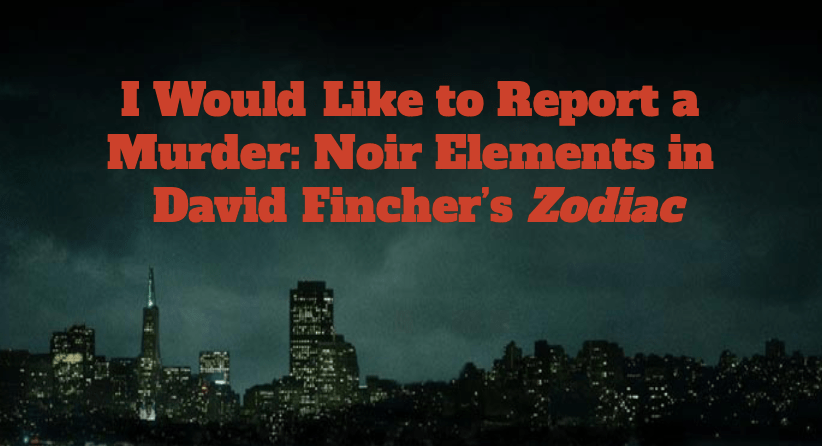

Shirley Jackson’s “The Lottery”: Have Human Rights Become a Privilege?

“The Alley” by Terence O’Leary

Teresa Diviachi

First they came for the socialists, and I did not speak out—

            because I was not a socialist.

Then they came for the trade unionists, and I did not speak out—

            because I was not a trade unionist.

Then they came for the Jews, and I did not speak out—

            because I was not a Jew.

Then they came for me—

            and there was no one left to speak for me.

                                                            – Pastor Martin Niemöller

            Have you ever stepped out of a café with a cup of coffee, maybe a pastry, and sitting outside was someone holding a sign “Anything Helps.” Their gaze may have been low, fixated on a spot somewhere around your feet or perhaps they stare upwards, waiting to see if anyone will look in their eyes, even for a second. Maybe they are quietly murmuring to a scruffy pitbull curled up on a blanket beside them or maybe they are drawing on scraps of cardboard offering these works in exchange for whatever they can get. What do you do? Do you give them your coffee? Offer them your pastry? Maybe slip them a dollar or two? Or do your eyes slide past them as you stiffen your spine. You tell yourself what other choice do you have. You tell yourself that you cannot save everyone.

            Ritualistic sacrifice has existed in human societies, in some form or another, for millennia. According to René Girard and like minded theorists, a person is chosen as a scapegoat, a single act of violence is enacted upon them which prevents greater violence from occurring amongst larger society, and order is maintained (Andrade). In Shirley Jackson’s “The Lottery,” the scapegoat has come a long way from this ritualistic sacrifice as outlined by Girard. In Jackson’s story there is no attempt made to project a sense of guilt onto the scapegoat. Instead, a distorted pall of democratic justice is cast over the process; the villagers are led to believe that anyone could end up being “the one.” It is a false sense of impartiality, one that has become common in Western nations such as the U.S. wherein the myth of hard work and determination has become a farcical mask over the reality of innate privilege. In a mandatory lottery where death is the prize, no one can ever truly have a fair shot at the life they want.

            According to Girard, human society is based on mimetic desires (Andrade). As a child, one learns what they should desire, from jobs to romantic partners, as well as the designated appointees for whom each category of desired objects is accessible by copying adults (Bailey 40). At the start of Jackson’s story, it is the children the reader meets first. School aged children, freshly freed from class for the summer, convey an air that is both pleasant but also wary. There is a sense of something being off in the description of the children’s behavior, they seem afraid to make a commotion. The boys begin to collect rocks in their pockets and the girls huddle close together (Jackson 291). The children move between the seriousness the reader will find in the adults throughout the rest of the story and the uninhibited enjoyment of holiday freedom that children of their age should be expressing. Instead of running about unrestrained “they tended to gather together quietly for a while before they broke into boisterous play” (Jackson 291). While this self-imposed limitation on their movements is introduced as a result of school only recently ending for summer break, the parallel with the adults’ behavior is clear. In the next paragraph, the men are described in the exact same manner; they have also gathered in the square but “their jokes were quiet, and they smiled rather than laughed” (Jackson 292).

            These youngsters have begun to realize that their lives are not truly their own. In the few years they have been cognizant of the lottery they have already absorbed its intended results. Hovering over them now is the constant knowledge that with a slip of paper they could be stoned to death. Play, joy and laughter are privileges, not rights, reserved for certain people and certain spaces. Perhaps even more importantly, the children understand that they do not decide what happens to them; there are certain choices that are not, nor will ever be, their own. The children will become their parents, constantly fearful of what the future might bring. The mimetic desires of human behavior are instinctual lessons that run much deeper than casual imitation. It is these instincts that will come to govern the children. They will become adults who put rocks into their children’s hands and teach them that it is necessary to turn on their mother when society points a finger (Jackson 301).

            If someone wakes up everyday knowing that there is a potential death sentence hovering over their head that grows closer with every tick of the clock hands, they can never truly live a life led by free will. They will always be afraid that they are next, always be afraid to step out of line and attract the wrong type of attention. They will never want to completely share themselves with someone for fear of losing that person. And perhaps worst of all, they will never be able to trust another person. One can never feel true empathy for another being when they know that someday that person will turn around and strike them down in the hopes of saving their own skin.

            Girarad’s mimetic theory of life depends on the scapegoat being perceived as guilty, they must deserve death. I argue that in the case of “The Lottery,” it is not that the scapegoat must be guilty, it is that they must be perceived as deserving death. The human conscience must be able to justify the violence they perpetuate on the sacrificial victim. In the lottery, the perceived equality of pulling the black dot, that anyone could be chosen, and the ritualistic nature of it, a tradition that is followed regardless of science or cultural progress, justifies the murder of an innocent. There it is, biased equality and discriminatory religiosity, the foundational virtues of United States socio-political authority! I posit that the portrayal of equal opportunity is as skewed in the story as it is in our own lives.

            Take a look at how the villagers organize themselves. The head of the household is always male, and a woman belongs to the family of her male guardian (either her father, eldest brother or husband) (Jackson 299). Even a boy barely over the age of 16 is considered to have dominion over his mother in the absence of the husband (Jackson 295-296). It is also the right of the man to pull the slip that determines his family’s fate. Only after the men have pulled, do the individual members of his family have the chance to take their fate into their own hands. This is not self-determinacy; this is follow the leader. What is more, an unelected pseudo-official with no ties to the government is in charge of the process.

            The owner of the local coal company, Mr. Summers is the white, middle aged male who presides over the drawing. While he is assisted and sworn in by Mr. Graves, the postmaster, Mr. Summers is the one who holds onto the filled black box the night before the lottery. He maintains control over the box throughout the drawing and is the one to call out the names of the townsfolk, question absences, and recite instructions. No one questions his position not even the villager who is chosen to die[1]. His is an absolute authority and there is no evidence that he earned this role. The reader learns nothing about him being elected or proving himself as having superior leadership skills. On the two occasions the villagers’ genuine opinion of him is shared, they are pathetic and critical. As a whole, they feel sorry for him because he has no children and his wife is “a scold” (Jackson 292). More specifically, Old Man Warner is offended by Mr. Summers’ jovial manner in conducting the lottery (Jackson 297). Why is he the leader then? He owns the coal company, which means he has the time and money to devote to organizing village activities. Unlike the villagers—most of whom are probably employed by him and therefore depend on him for their livelihood—Mr. Summers does not have to work around the clock in order to support his family. With his privilege come the tools of leadership: time, energy and money that can be spent wooing the villagers. While there is no hard evidence that he has rigged the drawing[2], the description of his ownership of the box leaves that possibility open. And even if he is honest, it is clear that his role is sacred and he has a special authority over the lives of the villagers.

            In order for the lottery to function, the villagers must believe it is a fair process: everyone pulls a slip blindly and anyone could be chosen to die. As we have just seen though, that is never really the case. I believe Jackson is trying to warn that the same applies in our own lives. We have learned to turn a blind eye to pain and suffering because we live in a world where trying to prevent this pain from spreading puts us at risk of becoming the next sacrifice. The more someone cares and pursues a life in which they offer hands-on empathy, the more likely it is that they will also suffer. The reason that person sitting outside of the café causes you to stiffen your spine, is that speaking up for them jeopardizes the always precarious circumstances that keep you safe. To put it rather bluntly, social workers and public school teachers do not make the same amount as bank executives and silicon valley techies. What is more, the safety net for the former is far smaller than the benefit packages for the latter. We have created a society in which putting one’s neck out there means taking a blow and continuing to take blow after blow for as long as one can stand to put themselves out there.

            Finally, what about society’s scapegoats? What about those that are sacrificed so that others may rise? There can only be a 1 percent if there is a 99 percent left behind. Does anyone ever wish to be made into a sacrifice for the sake of maintaining the status quo? Was Tessie Hutchinson any more deserving of death than the other villagers or did she just have the bad luck of pulling the black dot? I think the answer is clear and can be seen in our own hierarchical, “democratic,” society wherein wealth equates to opportunity. Just like Tessie is made to seem fated for death, those that do not “succeed” are easily framed as deserving their own sorry fate. Homelessness is not a natural state, it is an enforced one. Fear of becoming so yourself, fear of risking what little you have, fear of being just the same, this has created the dichotomy of “us” and “them.” So what happens when it is your turn and you are “them?”


[1] Tessie Hutchinson challenges Mr. Summers actions, saying he “didn’t give him [Mr. Hutchinson] enough time to take any slip he wanted” (Jackson 298-299). She does not challenge Mr. Summers’ right to preside over the lottery.

[2] Some theorists have cited the difference in language that describes the villagers as “taking” (Jackson 296) a slip while Mr. Summers and Mr. Graves “select” (Jackson 297, 298) slips as evidence of their having a certain protected status in the process. While this is an interesting case of semantics, for the sake of this argument, I am reading these words according to their literal meanings.

Works Cited

Andrade, Gabriel. “René Girard (1923—2015).” Internet Encyclopedia of Philosophy, http://www.iep.utm.edu/girard/#H2.

Bailey, Ted. “Sacred Violence in Shirley Jackson’s ‘The Lottery’.” British and American Studies, vol. 20, 2014, pp. 37–42,203.

“Martin NiemöllerI: ‘First They Came For Socialists…”.” United States Holocaust Memorial Museum, 30 Mar. 2012, encyclopedia.ushmm.org/content/en/article/martin-niemoeller-first-they-came-for-the-socialists.

Jackson, Shirley. The Lottery and Other Stories. 1st Farrar, Straus and Giroux, The Noonday Press: Farrar, Straus and Giroux, 1991.

Power and Privilege within the Academy: The Study of Oppressed Identity in David Mamet’s Oleanna

Teresa Diviachi

Power is a force which does not allow one to self-determine but rather privileges one with the allowance of self-determination. To wield power is to decide one’s value, to decide the value of one’s thoughts, to place oneself into the larger relationship of society as a recipient of attention, of desire, of comfort. Despite the variety of critical responses to Mamet’s Oleanna, the general agreement is that it is a play about power. Between whom the power dynamic occurs, however, is where disagreement becomes rife with academic accusation and politically motivated attack. Is it a play of teacher against student, feminist against patriarchy, the Right Wing against identity politics, academic against academy? There is an expectation to separate and define dichotomous perspectives for Carol and John; put simply, the characters are asked to pick a side. The very notion of the discourse between the identity of Carol and John being an action of singularity—they are one and not the other—is the very problem that the play highlights and falls victim to. 

In academia, words are everything. Language is power, and it is weakness. Who can speak, what they can speak about, the words they can use in order to garner respect and therefore power, is determined by a very small subset of society and always has been. It is a privileged identity⎯ male, white and bourgeois⎯ that has repeatedly answered the former questions, and due to limited input, which is due to the limitation of contributor, the answers have delimited a set of narrow identities within which someone seeking access to the power afforded high-level academics must perform. There is an ideal “humanism” imagined by the characterizations of John and Carol, powerful beings and subordinate beings who speak the preconceived language and therefore agree to respect the ideal. Carol proves herself the perfect student not because she obeys John’s direct lesson, but because she learns the lessons John inadvertently teaches her about power being gained not through self-expression but by succumbing to the expectant identity of the academy. Carol must shed the possibility of being merely a student and be an angry feminist, in the form that feminism is allowed within the sphere of academia. If the spectator is not allowed to explore the play in the context of oppression within the academy (and society), then the spectator will easily fall into the trap of picking sides—either Carol is right or John is right, the student or the teacher, the woman or the man—instead of realizing that this forced “unity” corrupts the liberalized self-expression of plural identity.

It must be made clear that this is not a play with an antagonist and a protagonist. This is a play with two protagonists who also happen to be each other’s antagonists. John and Carol have a mutually oppressive and violent relationship in which they perform as teacher/student and student/teacher.[1] The roles are clear in Act I of the play where John has control over the direction and intention of the conversation with Carol, a student with little grasp of the class’s subject matter who can only think of fixing this problem by filling a notebook with her professor’s regurgitated lesson plan. The use of “fix” and “problem” is significant, as it symbolizes the itemization of education which is broken into parts each with a specific job and qualitative value. John uses this language in Act II, claiming “I don’t want to fix you” (Mamet 54). His tone is defensive, the emphasis his own, as he knows that this vision of the professor as the one who puts the student together in the form he believes is right, is the vision that is being brought to trial, and he imagines himself in opposition to it. According to this vision, a student is worth less than a professor, and a student’s papers are assigned worth according to a professor’s appraisal. If a student does not understand something, that is a “problem” and it is one that must be “fixed,” like putting an Ikea table together according to the directions and with the provided tools. Eventually, John decides to completely disregard the work Carol has done so far and give her a ranking, an A, in exchange for certain actions he deems to be of equal worth: her coming to his office a number of times to talk (Mamet 25). In this scene the rules of the academy do not state that her grade is dependent upon the paper, what she has to say, and how she says it. In fact, John has already decided that her paper is subpar (Mamet 8-9). Instead, the rules are what those in power within the university decide they are. If John wishes to dismiss Carol’s paper or assign her an A, then he, as teacher, is able to do this. All Carol, as student, has to do is accept his authority, to participate in the dialogue as a student of her caliber and position is expected to. However, Carol is not willing to accept this role. She and the group she comes to represent want more; they want power, and John’s offer becomes the opening through which she can gain access to the elitist hierarchy that distributes power. 

John’s power becomes his vulnerability. What should have been a normal exercise of his dominance, as white, male, bourgeois professor towards a female, lower class, student, instead falls into the “trap” laid by the marginalized group seeking restitution through identity politics. The term “trap” is placed in quotations because it is only a trap according to a reading of the play that favors what Marc Silverstein refers to as the New Right agenda and, on a larger scale, what Paulo Freire calls the oppressor’s humanism. I will not pretend that the New Right is not a familiar political constituency : a homogeneous, elitist class with a powerful role in society due to a history of oppressing alterity by portraying the “Other” as the cause of societal discord and economic deficiency. Silverstein defines it more specifically, in relation to Oleanna, as a movement focused on the “return of ‘family values,’ a nationalism bordering on xenophobia, the reconstitution of the American community⎯ a ‘community’ defined more on the basis of exclusion than inclusion” (Silverstein 105). While Oleanna does not necessarily defend or articulate this neoconservative ideology, it does present a situation in which the idealized “humanism” of the oppressor appears as the most appropriate solution.

What is meant by “humanism?” According to Freire, the oppressor’s “humanism” is meant to integrate and incorporate marginalized people as if they are “the pathology of the healthy society” and must be turned into “automatons” (Freire 74). The healthy society, according to the oppressor, is what Silverstein refers to as a unifying “common culture.” The university is intended to disseminate the common culture amongst its students, promising to eliminate identities of difference and, along with them, racism, sexism and other ideological prejudices that allow for the systematic abuse and violations of people’s rights, minds and bodies. However, as Silverstein points out, the application of this concept is actually a corruption of potential unity through academic discourse, which reflects the broader corruption of the term in social and political discourse. In Act II, John makes an appeal to Carol by referencing this idea that they are both “human”:

Carol: …Good Day. (She prepares to leave the room.)

John: Wait a second, will you just one moment. (Pause) Nice day today.

Carol: What?

John: You said “Good day.” I think that it is a nice day today.

Carol: Is it?

John: Yes, I think it is.

Carol: And why is that important?

John: Because it is the essence of all human communication. I say something conventional, you respond, and the information we exchange is not about the “weather,” but that we both agree to converse. In effect, we agree that we are both human. (Mamet 52-53)

John, representative of the institution of education, is trying to teach the student “to (mis)recognize the irrelevance of such difference when compared with their membership in a ‘common culture’” (Silverstein 109). Carol’s insistence that she must bring John down for the sake of her group becomes an attack of blind allegiance to a political correctness that is endangering the unity of humanity. The spectator becomes angry at Carol because she is actively twisting John’s actions and words in order to take away his power (and its accruements) and, in doing so, perpetuating division within the academy which represents division within the larger scale of society. The use of the word “conventional” is key. John means this word to establish that there are conventions which are shared agreements between humanity as a unit, spaces of commonality, instead of separate group customs for communication. If Carol is “human,” meaning if she is invested in what is best for society, then she should understand and obey these conventions. In Act III, Carol confronts the bigotry of John’s charge of her lacking humanity:

John: Don’t you have feelings?

Carol: That’s my point. You see? Don’t you have feelings? Your final argument. What is it that has no feelings. Animals. I don’t take your side, you question if I’m Human. (Mamet 65)

Carol is pointing out what John’s expectant privilege prevents him from noticing: that there must be a source of this conventionality. Someone must decide what aspects of individuality need to be sacrificed in deference to standardized norms. An “human” ideal must be established that consolidates and legitimizes the social hierarchy that privileges particular characteristics by assigning power in direct correlation to how closely one aligns with said “human” identity (Silverstein 114). This decision definitely does not belong to Carol or her group, which is the reason she moves to take John’s power in the confrontational manner that she does. She represents a body that seeks an identity that can access the power of the ideal human, and it initially appears that she desires to do so without forfeiting her identity as Other. She insists upon differentiating herself from John, describing them as having “side[s]” (Mamet 65) and talks of how “you [John] mock us” (Mamet 52), separating John and the group he represents from herself and her group. And yet, even as she argues that convention should not dictate her identity, convention dictates the manner by which she can reach for power. She must go through the Tenure Committee; she must speak in the convoluted language of a (male) academic; she must affect the book lists for courses, as this is what she, as the oppressed, has been taught grants power. Her power must come from the same source and means as John’s power, and she must operate within the boundaries of convention to bring down convention. One cannot help but wonder whether Carol really is “taking down the man” or whether she is “becoming the man.” Is she a student/teacher or is she a student who becomes a teacher?

If John did what is conventionally expected of him, if he acted as (superior) professor to the (subordinate) student, then why does it end so badly for him? The cultural context of the play’s publication and earliest productions should be considered. The sociopolitical changes of the 1990s in the U.S. may not have been as visibly activist or radical as the civil rights and liberation movements of the 1960s and 1970s, but they were still bubbling with anger and anxiety. It was the era of the Anita Hill and Clarence Thomas trial, a case which ended in the man’s favor and around which a misogynistic vision of feminism was imagined, one in which the women’s liberation movement became a “subversive cadre threatening the democratic process” (MacLeod 207). Feminism, and by extension multiculturalism, was vilified, its entreaties for equality denounced by the fear of an oppressor who saw his way of life disappearing. There was a large sector of middle America that saw its way of life vanishing and searched for an explanation that “does not call into question the economic order from which it has derived its well-being” from in the first place (Silverstein 113). While Silverstein’s essay is from 1995, the fears he describes have not abated, and the direction in which they are aimed have remained fairly static. One has only to follow Trump’s Twitter account for a day to learn that there is still a sector of middle America that feels its economic loss is due to marginalized groups’ drive for identity legitimation, including gender and sexual equality. Carol represents these marginalized groups, acting as a stereotype of feminist ideology. John’s elitist vanity becomes a weakness exploited by feminists as they are imagined by a sector of the elite who feel their power being threatened by the pressure of marginalized groups insisting on entry into the hallowed halls of higher education. It is a pervasive imagined “Other” that has been absorbed by student and teacher alike.

There is a debate over whether or not Carol and her group represent feminism or at least gender and sexual equality. It seems a fair stance to take, on several occasions she points to the difference of gender between John and herself as a source of contention and injustice, and the same for references to sexual desire and sexuality: “To speak to a woman in your private” (Mamet 51), “some of us. Overcame prejudices…sexual, you cannot begin to imagine” (Mamet 69), “You think I’m a…frightened, repressed, confused…abandoned young thing of some doubtful sexuality” (Mamet 68). The list of inappropriate behavior Carol reads aloud in Act III all reference his behavior towards female students and the sexist or sexual undertones are apparent in the condensed format:

The twelfth: ‘Have a good day, dear.’ 

The fifteenth: ‘Now, don’t you look fetching…’ 

April seventeenth: ‘If you girls would come over here…” …I saw you…stand there and exploit your, as you thought, “paternal prerogative” (Mamet 66, emphasis my own)

After John describes the Tenure Committee as a group of “Good Men and True” (Mamet 50, emphasis my own), Carol is angered by his purposeful oversight of the female member of the committee. She points out the bias of his language, that he could easily claim his description is “Good Fun,” “An Historical Phrase,” “An Oversight” or “All of the Above” (Mamet 51) and he would not be condemned for ignoring the female member of the board. The capitalization of each phrase points out how these reasons are firmly established as acceptable by society. It is Carol who challenges this acceptability: “it is a demeaning remark. It is a sexist remark, and to overlook it is to countenance continuation of that method of thought” (Mamet 51). The language is clearly emulating feminist ideology, pointing out the misogynistic slant of John’s phrasing and how that represents a misogyny perpetuated on a larger scale for John does not just represent himself but is a symbol of a “group” that has misused their power (Mamet 50). Kellie Bean identifies this “group” as a patriarchal authority. John is a “symptom of the masculinist ideology guiding his identity and behavior” (Bean 121). While John may not be willing to admit his own power, Carol is ready to point out that he sits in a “so-protected, so-elitist seat” (Mamet 52) that draws power from an established patriarchy in contrast to her own weaker station that does not (initially) align with the status quo of elitist identity. 

John’s failure as a teacher is that he imagines himself as a transgressive and empathetic professor while merely using the language of this image to fulfill his own material needs. In the “academic setting of Oleanna…its participants share a specialized language that assigns status according to an individual’s ability to employ that discourse” (Badenhausen 3). Richard Badenhausen points out that language is the most important semiotic system in the cultural institution of the academy and that Carol’s disadvantage due to her inability to fully utilize the language is immediately established as a source of contention in the play (Badenhausen 3-4). The entirety of Act I is a testament of John’s self-absorbed, purposeful implementation of a language that highlights Carol’s outsiderness. He interrupts, corrects and belittles Carol while waxing poetic about taking off “the Artificial Stricture, of ‘Teacher,’ and ‘Student,’” (Mamet 21) which is really one of many openings for him to discuss himself and his book, the utmost symbol of academic duty. He gives long speeches about the banking model[2] and educational value which are underhanded insults directed at Carol and her lack of understanding and fluency with academic language:

John: If I fail all the time, it must be that I think of myself as a failure. If I do not want to think of myself as a failure, perhaps I should begin by succeeding now and again. Look. The tests, you see, which you encounter, in school, in college, in life, were designed, in the most part, for idiots. By idiots. There is no need to fail at them. (Mamet 22-23)

How can such a monologue not be both confusing and hurtful to a young student? The references to contemporary pedagogical theory will make no sense to Carol, a student who has come to his office because she does not understand his course on education. Carol’s line right before this little speech—“I do not understand” (Mamet 22)—applies to both John’s preceding comment but also to his general language. His terminology and references are perplexing, and Carol must repeatedly ask him to define a word or clarify a statement. The use of “I” does not distract from the analogous insult of John’s speech. It is obvious that John is using the cover of “I” to describe Carol and her failure to grasp the system of success employed by education. She must be a “failure” for not being able to understand tests created by “idiots.” If Carol’s behavior in Act II and III is labelled abhorrent by audiences because she disregards John’s fears, desires, and values, then John’s mistreatment and purposeful disdain of Carol in Act I deserves a similar criticism. It is verbal abuse ⏤ insulting who someone is and dictating what they should be ⏤ and is a form of violence. Peter Chiaramonte puts it simply: “Violence doesn’t necessarily involve physical force…Destructive energy impulses directed at intimidating the emotions will suffice as violence whichever way you are prone to tag it” (43).

When Stanton Garner taught the play to his sophomore theater class, he found that much of the response to Carol was a furious and aggressive hatred. He was “taken off guard by the force with which [the students] attacked their surrogate in the play and their unwillingness to entertain the possibility that the responsibility for the play’s climactic violence was shared” (43). How accurate a use of terminology, “surrogate,” as that is what Carol is for the students of his class: their immediate representative. Yet they withdrew from her and defended John because they could not perceive her experience as parallel to their own. They had absorbed the lesson that John expects Carol to have absorbed, that the authority of the educational institution should be respected, what it says is the rule of law. Reading the students’ responses to the play and the performance, it is clear that they were not able to see why Carol could be angry, where her anger came from. They could not see that a lack of voice meant a lack of self, that she has to do as John says, as the university says. If John wants her to come to his office for private conversations in exchange for an A, then she should agree. Garner explains “Mamet’s play not only highlights the environment of its academic reception, it intervenes in this environment, ‘framing’ the positions that one can adopt toward it, in both senses of the word” (44). The students have been taught the specific framework through which they should view higher education, and it is through John’s framework, not Carol’s. While he is referring to the play, I believe that Garner’s description of Oleanna as stacking the “emotional and ideological deck against Carol” is one that can be applied to his practical experience with student’s understanding of the institution of education. The students feel obligated to quiet their voice and replace it with the common culture’s voice, and are not aware they are doing so.

After watching the Clarence Brown Theatre Company production of Oleanna, Garner’s students continued to blame Carol for any behavior of John’s that could be construed as inappropriate. They mainly relied on her physical appearance and movements as the source of their reading, which ties in with “a wider cultural tendency to read character in terms of the performer’s body when female roles are concerned” (Garner 47). One female student wrote “[Carol] had provoked John to ‘sexually harass’ her…she doesn’t have to go to his office every day, but she does…And she doesn’t seem to mind him touching her knee or shoulder” (Garner 46). Several students wrote that the actress was not attractive enough to “justify any sexual approach on John’s part,” clearly parroting the cultural myth that sexual assault is about sexual attraction, not power. The students repeatedly revealed they had absorbed these inaccurate, oppressive prejudices encouraged by an elitist hegemony. Garner’s students appear completely unaware of where the source of John’s power comes from, and why Carol wants it or how she means to take it. For all intents, Garner’s classroom experience seems to reveal a failure of education to create a truly critical and forthright space for enquiry. Even more so, it reveals “the limits of classroom framing and the powerful cultural pressures conditioning student response” (Garner 49). It also reveals how important it is to include gender identity and politics in a reading of the play. These issues need to be addressed in classrooms if there is to be a greater shift in societal attitudes towards male and female roles. Carol cannot be viewed only as a student, she must be seen as a (white) female, student while John must be viewed as a (white) male, professor.[3] These characteristics are deciding factors of how the tension between them and the violence of their exchanges, both verbal and physical, occur.

The easiest way to prove the importance of their gender is to consider what happens by changing their gender identities. What if Carol were Carl, a heterosexual, young, white male? The plot would function very differently. From the viewpoint of heteropatriarchy, the charges of sexual assault would become unconvincing, especially within a play that very obviously makes the nuclear family⎯ husband, wife, son⎯ and the man’s authority as its head a loss that John is threatened with. This challenge to male authority would be reconfigured if it were a man challenging a man for power. The characterization of Carol is dependent upon her female identity as much as it is her student identity or lower-class identity. While Carol’s position of power comes at the cost of John’s, it is not an “eye for an eye” trade. Carol and John are not interchangeable. John’s power comes in a form that belongs to him and so Carol’s power must take that same form. She must perform as a feminist is expected to perform by the patriarchy, which means both performing as male and performing as non-female.

Part of the horrific nature of her attack on John is that it is one based in language. She controls John’s language in a way that imitates the traditional oppressor’s control of the traditionally oppressed’s voice. This oppression of voice is the power structure that the hegemony has put into place. When describing her charges of assault, it is not about what John did; it is about what she says John did. A common description of sexual assault cases is that they are a “he said/she said.” They are not about what actions took place, it is not a case of “he did/she did.” It is about who has the authority to say what he or she did, and have their words become the truth. Traditionally, as is implied by the syntax of the saying, the male voice is granted authority over the female. The “he” comes before the “she,” so if Carol wants to have power, she must have the authority of speaking that John has, so much so that what she says means more than what he says to the extent that she can decide what he did and what his actions mean.[4] Carol says to John, “You think, you think you can deny that these things happened; or, if they did, if they did, that they meant what you said they meant” (Mamet 47). Her accusations are false according to John, and if he still held power over her, then the accusations would be false according to the Tenure Committee. However, Carol has proven to be an apt student and learned to maneuver the avenues through which education authorizes power. Her language is more confident: whether or not she has knowledge to back up what she says, she sounds as if she does, and she makes reference to assiduously kept and time-stamped quotes. She has realized that she must appeal to the ego of the Tenure Committee, to threaten their own power in order to usurp their power. John is a representative of the group that holds power over her and her own marginalized group, “You. Do. Not. Have. The. Power. Did you misuse it? Someone did. Are you a part of that group? Yes. Yes. You are. You’ve done these things”(Mamet 50). This is not simply about silencing John. It is about silencing the institution which has silenced her.

And yet, Carol becomes a victim of her desire for power as much as John. Her conviction that the institutional authority of educational norms, that ideal “humanism,” are the source of potential power means she must lose herself and become the feminist figure the patriarchy expects. The play does not end badly for John; it ends badly for both of them. They have both lost themselves within the violent exchanges of linguistic and physical power. Carol must become the “bitch” (Mamet 79), she must emulate the male form and attack the nuclear family because this is what she has been taught is the expected way a marginalized person can seek power. According to Bean: 

Typically, dramatic portrayals of women rely upon a heterosexist notion of gender as a binary contract in which men and women occupy oppositional and mutually exclusive positions…these binaries reflect cultural stereotypes of gendered behavior: active male/passive female; strong/weak; subject/object; dominant/submissive. (Bean 113)

In the original production of the play, directed by Mamet, Carol’s appearance shifts drastically from Act I to Act II and III. Her shift in power is apparent not just by her newly acquired skill with academic language, but also through a very direct visual acquisition of male power: a power suit, a form of masculine dress which is intrinsically bound to men’s position in the most privileged economic and political structures. Her language must become the language of the patriarchy, and her body, the visually preferred source of female character identity, must become male (as well as bourgeois) in appearance. Carol’s options are limited by the patriarchal academy’s conception of an academic.

In conjunction with the binaries of gender, John turns to physical violence when language is no longer a source of power. This is an avenue historically afforded men and closed to women. Carol manages to dominate John with words, yet she ends the play beaten and cowering below him. Her final words “Yes. That’s right,” with the directed action that she looks at John and then “lowers” her head, a movement of deference or submission (Mamet 80), signify that his domination of her body is to be expected. Under patriarchy, this is the conventional way for a man to respond to a woman subjugating him. John’s physical violence was generally welcomed by audiences. Elaine Showalter quotes an audience member next to her as saying “I nearly climbed up on stage to kick the shit out of the little bitch myself” (Showalter). John is easily justified in attacking the woman who is taking away “The Material” as he refers to it (Mamet 44). Carol will “cost me [John] my house” (Mamet 48) and “deprive a family” (Mamet 50). It is slowly revealed that instruction or being an educator is not John’s primary agenda. In Act III, it is Carol that finally states John’s foremost intent:

Carol: …Do you know what you’ve worked for? Power. For power. Do you understand? And you sit there, and you tell me stories. About your house, about all the private schools, and about privilege, and how you are entitled. To buy, to spend, to mock, to summon. All your stories. All your silly, weak guilt, it’s all about privilege; and you won’t know it. Don’t you see? You worked twenty years for the right to insult me. And you feel entitled to be paid for it. Your Home. Your Wife…Your sweet “deposit” on your house… (Mamet 64-65)

Even as Carol recognizes that John has gone through the state of being a student and done the work needed to become a professor, she points out the difference of their experiences. That “some of us. (Pause) Overcame prejudices. Economic, sexual, you cannot begin to imagine. And endured humiliation I pray that you and those you love never encounter. (Pause) To gain admittance here…We, who, who are, at any moment, in danger of being deprived of it. By…” (Mamet 69). Carol sounds pained, her pauses are timed for someone who is holding back overwhelming emotions of hurt and frustration at not being understood, perhaps holding back tears. And she has to hold them back, crying would reveal her vulnerability and threaten the fragile power she has managed to gain by not appearing feminine. She uses John’s word, “deprive,” to point out that despite being in supposedly parallel positions, their experiences are divergent. John speaks of depriving his family of a bigger house while Carol speaks of being deprived of the right to education. There is a vast difference in what John and Carol expect from life and from the university.

Carol does not only threaten The Material. She threatens the privilege of the identity John believes he deserves. At first John is willing to agree to the stipulations put forth by Carol and her group. Banning books is a possibility until he realizes that they want to ban his book. This is a direct silencing of his voice and a cutting off of his legacy. Carol becomes the feminist waging “linguistic terrorism” (Silverstein 112) on the academy. She is not interested in promoting open dialogue, she is interested in suppressing dialogue. Only voices which promote the correct messages should be allowed. It is an (mis)application of the oppressive practices of supposed “humanist” education onto multicultural ideology. An actual twisting of words. Instead of the oppressor (patriarchy) suppressing the oppressed (the Other, i.e. women), the oppressed is suppressing the oppressor. John’s realization that his book is on the list becomes the catalyst for his physical rage. He finally says no to Carol’s demands and regains enough of his voice to insist that he has a responsibility, not to his students or to education, but to his profession, to his son and to himself (Mamet 76). He must protect his legacy. As Carol leaves, she regains her verbal power by challenging his role as head of household, just as she has challenged his role as head of the classroom and patriarchy’s role as head of Western society, telling him not to refer to his wife as “baby” (Mamet 79). John calls Carol a “cunt,” an insulting reference the female anatomy that turns her into nothing but the body part which women have been defined.

The power Carol seeks is not her own and does not rival the power that John can access. As said before, true power means one has been privileged with the allowance of self-determination. Carol never has that privilege. In fact, she becomes exactly what society determines she can become; a “vicious little bitch” (Mamet 79). Women are traditionally denied the privilege of a multiplicity of female identity in literature, which reflects the denial of a multiplicity of “Othered” identities in society. 

While multiculturalism on campus is not new, it is a recent and still developing space within institutional education in relation to the history of established universities. San Francisco State University added the first black studies department in 1969 (Mayberry). That was only 50 years ago. “Identity” on campuses has evolved, influenced by the return of  WWII veterans, followed by Korean and Vietnam veterans, taking advantage of the GI Bill to seek access to institutions of higher learning that had been closed to a marginalized majority of population. Diversity entered the educational space and identity “was no longer a personal, individuating matter, but a function of those phenomenological characteristics one shared with others” (Mayberry 2). bell hooks connects the shifting conceptualization of identity with postmodern pedagogy,” arguing that the deconstruction of identity for the benefit of uniformity is the taking away of marginalized people’s critical voices. This is what Silverstein warns can be seen as encouraged by a New Right, an oppressor’s reading of Oleanna. The appeal to being “human” means an appeal to being human as John and the patriarchy see humanity as existing. However, “critiques of essentialism which challenge notions of universality and static over-determined identity within mass culture and mass consciousness can open up new possibilities for the construction of the self and the assertion of agency” (hooks par. 10). Students must be engaged in open discourse, certain topics cannot be avoided or excluded because they do not fit into the mindset of the institution or they do not agree with the strictures of dominant society. To say that Oleanna is a play about power and not gender or feminism, is an example of constricting thought and theory. Just like Carol becomes a victim of her own violently enforced, objective identity, so to does the student become a victim of the singular opinion they are allowed to operate within.

If theater is a stage upon which culture is played, or as Silverstein (referencing Mamet) says, “theatre stages the contents of America’s collective unconscious and…translates those contents in consciousness” (104), then Carol and John’s gender cannot be taken out of a study of Oleanna. As Kellie Bean explains, “representations of masculine and feminine identity are not ideological equivalent,” (111) and so they cannot be treated as such within literary criticism or studies. Gender is a topic rife with controversy, as is education, and there is an active dialogue around shifting societal attitudes towards gender, sexuality, education and equality occurring in the U.S. To write about power within an influential and elitist site such as the university, using a male professor and a female student, is to write a play about gender dynamics as well as a play about teacher and student dynamics. This is undeniable. What matters now is that the institution of education does not fail its students as John failed Carol. It must recognize that educational tactics need to continue to change in order to challenge the idealized “human” that John contrasts to Carol, so that students do not align themselves with the oppressive expectations of conventionality. Multiplicity, plurality, diversity, whatever term one wants to use, the importance of the concept of difference remains invaluable to the intellect and therefore to the possibility of a more peaceful and united society.

Notes

[1] These terms come from footnote 5 of Robert Skloot’s “Oleanna, Or, The Play of Pedagogy” p. 105. He references Chris Amirault’s critique of Paulo Friere’s terms “teacher-student” and “student-teacher.” My use of the terms, while related to Friere’s idea of bank-clerk teacher versus revolutionary educator, is not a direct application of his theoretical terminology. Instead, I mean to describe the dual identities of John and Carol, how they transition from teacher and student, respectively, to student and teacher. The roles are not completely reversed, but expanded and so they include both.

[2] Paul Freire explains the banking model in Pedagogy of the Oppressed as a form of education that treats students as vaults waiting to be filled by teacher-depositors.

[3] I have placed white in parentheses not because I do not believe their race matters, but because I believe their shared identity as white neutralizes the relevance of race in comparison to their gender, at least for the focus of this essay. I do believe their race is important. If their racial identity is changed, say John were a black, male professor accused of sexually assaulting a white, female student, the play would become involved in a very different, deep seated history of racist violence due to white fear and desire of black male virility.

[4] John quotes the Stoic Philosophers in Act II, “…if you remove the phrase ‘I have been injured,’ you have removed the injury” (Mamet 47). The irony of John choosing this quote, one that explains Carol’s successful co-option of his actions via words, is exacerbated by his seeming ignorance of the irony of it.

Works Cited

Badenhausen, Richard. “The Modern Academy Raging in the Dark: Misreading Mamet’s Political Incorrectness in ‘Oleanna.’” College Literature, vol. 25, no. 3, 1998, pp. 1–19. JSTOR, JSTOR, www.jstor.org/stable/25112400.

Chiaramonte, Peter. “Power Play: The Dynamics of Power and Interpersonal Communication in Higher Education as Reflected in David Mamet’s Oleanna.”The Canadian Journal of Higher Education, vol. 44, no. 1, 2014, pp. 38-51. ProQuest, https://search-proquest-com.jpllnet.sfsu.edu/docview/1536865685?accountid=13802.

Freire, Paulo, et al. Pedagogy of the Oppressed. 30th anniversary ed., Continuum, 2000.

Garner, Stanton B.”Framing the Classroom: Pedagogy, Power, Oleanna.” Theatre Topics, vol. 10 no. 1, 2000, pp. 39-52. Project MUSE, doi:10.1353/tt.2000.0002.

hooks, bell. “Postmodern Blackness.” African Studies Center, University of Pennsylvania, 19 Apr. 1994, http://www.africa.upenn.edu/Articles_Gen/Postmodern_Blackness_18270.html.

Mamet, David. Oleanna. Pantheon Books, 1992.

Mayberry, Katherine J. “Introduction: Identity Politics in the College Classroom, or Whose Issue Is This, Anyway?” Teaching What You’re Not: Identity Politics in Higher Education, edited by Katherine J. Mayberry, NYU Press, NEW YORK; LONDON, 1996, pp. 1–20. JSTOR, www.jstor.org/stable/j.ctt9qfbvx.4.

Showalter, Elaine. “Acts of Violence.” Times Literary Supplement [London, England] 6 Nov. 1992: 16+. Times Literary Supplement Historical Archive. Web. 14 Nov. 2018. http://find.galegroup.com.jpllnet.sfsu.edutlshinfomark.do&source=gale&prodId=TLSH&userGroupName=sfsu_main&tabID=T003&docPage=article&searchType=AdvancedSearchForm&docId=EX1200468285&type=multipage&contentSet=LTO&version=1.0.
Silverstein, Marc. “‘We’re Just Human’: ‘Oleanna’ and Cultural Crisis.” South Atlantic Review, vol. 60, no. 2, 1995, pp. 103–120. JSTOR, JSTOR, www.jstor.org/stable/3201303.

Halcyon Dreams

Damascus Triola

In this essay, I compare the ways in which Macrobius’ fifth-century work on dreams and discourse differs from Chaucer’s fourteenth-century work which operates along a similar line of dream inquiry. As such, I will first explore the Macrobian conceit of dreams and then move into a Chaucerian understanding of dreams, discourse, and narration. Ultimately, I seek to foreground in Chaucer’s work a movement away from God as the source of creation, and instead toward the opening up of a space for human creativity and a sense of internality, consciousness, and self-fashioning through the profanation of dreams. 

If narration and dreaming both share the quality of a perspectival representation of consciousness, then it is fair to begin acknowledging the similarities between a dreamer and an author. A dreamer dreams of an alternate space in which the central character plays the role of protagonist, and a writer writes a similar role. A problem arises, however, in the attribution of authorship. Addressing this concern, an early medieval scholar, Macrobius, defines the origins of various dream types in his “Commentary on the Dream of Scipio.” As defined, they exist in two primary categories: divine and non-divine. However, written or spoken discourse does not originate from the category of divinity. Instead, discourse exists as a medium or vehicle for meaning translation, the magical job of the oracle—a job which is often applied to translating the very thing we are discussing, dreams. And it is precisely here where Chaucer positions the role of the author: both within and without dreams, and to this author the dreamer pays tribute in the form of visions.

In this conception of dreams and narrative, narrative is the story of the story, the narration of the dream vision. A vision is already a kind of narrative and therefore a discourse on dreams is metanarrative. As a result, the narrative on dreams is inherently separate from the divine realm by virtue of its presentation through human translation and from within the human sphere. Macrobius’ sequestering of discourse to the human sphere—rather than divine sphere—is further complicated by his explication of the author’s/oracle’s role in interpretation. Through the dream state, a divine image or message is received, a translator (through interpretation) transfers  those images into human discourse in the form of words, images, or sounds, and then often that discourse must then be reinterpreted. In this model, the initial translator’s role (i.e. author) is to provide as transparent a layer as possible between the divine vision and the narrative created. 

The next step is the human interpretation of a human interpretation which becomes a narration of the narration of a dream. Despite this nestled metadiscursive or metanarrative distancing from the divine, Macrobius’ text on dreams still treats dreams like they are divine themselves. In his definition of oracular visions, Macrobius does not acknowledge the bias of human subjectivity because he believes in the objective Truth of God. This is simply how he defines True vision. However, Chaucer’s The Book of the Duchess points to, and plays with, this Macrobian ideal of transparency through the contrasted opacity of its narrator. Instead of providing a narrator who reveals the divine workings of a celestial sphere, the narrator begins the narrative by merging into obscurity, through his own flaws, this division between the divine and human spheres. Further, when the narrator “wakes up” in a dream, his dream itself is influenced by the reading he was doing before falling asleep. We are then disallowed, disavowed, from seeing this dream as divinity. It is planted firmly in the human terrestri. However, like Macrobius’ oracular dreams, this dream too holds the potential to reflect a future reality within the world of the waking. Macrobius’ celestial dream realm of divinity and divine predestination and Chaucer’s human dream sphere which reflects more accurately the realm of both human desire and anxiety, share the quality of foretelling. In this overlapping, Chaucer’s human dream sphere begins to raise the question of to what degree human dreams predict the future insomuch as they put form to, thereby reifying the subconscious. To Macrobius, the effect (the result of a prophetic dream) has nothing to do with its eventual fruition, but for Chaucer’s text, the effect can be the cause of its own effect. The narrative becomes the basis for the realization of the narrative’s content.

Part I – Macrobius’ Dreams

The Macrobian presentation of dreams from his “Commentary on the Dream Scipio” provides an introduction to a pre-Chaucerian conceit of dreams. Macrobius, a clear influencer of thoughts and dreams, offers a relevant entry point to thinking about dreams as they relate to narration. Macrobius’ dream types, although divided into various subcategories, can be simplified into two primary types: predictive and non-predictive—dreams which are imaginary/fictional and dreams which are purely non-imaginary/factual. To relate this in modern terms, a dream which is imaginary/fictional is predictive of Truth because it is not tied to human perception of the waking world. Instead, it finds its source of information in divinity through a subject who is experiencing no waking stimuli (and therefore free of the Earthly sphere). Based on these contingencies, it may be prophetic. A dream which is non-imaginary/factual is non-predictive of Truth because it is tied to the subjective human experience of stimuli (from the earthly sphere). Although not in these terms, Macrobius is arguing against the subjectivity of human perception as being capable of producing Truth (divine truth). Instead, he argues that only through the most objective means attainable by humans—prophecy/the prophet—can humans approach an understanding of the incomprehensible divinity of Truth. This places narrative discourse as most ideal when it is most transparent or least affected by human subjectivity (Macrobi 265-267). 

For Macrobius, Truth and divinity are the same thing—as such, there is no mode of meaningful discourse which does not have its origin in God. While Chaucer’s mode creates space for the base, Macrobius’ disavows it. Dreams which are tied to the human world “nightmare and the apparition,” as opposed to the divine one, are of the earthly realm and therefore more base. The earthly and therefore human-in-origin dream “arise[s] from some condition or circumstance” that was encountered during waking hours. As a result of this human origination, the dream may not be Truth. Human dreams are, by their position in his spherical conceit of the universe, not divine (Macrobi 266). In this vision of visions, truth is divine and originates not in our plane of existence and experience. However, this understanding is complicated by human apprehension of dreams whose source is divine. To apprehend the divine would be an impossible task, similar to asking someone to objectively describe existence. Nonetheless, humans must interface with Truth or with existence in order for information on either to be received and retransmitted. This is presented through deliverance of prophecy, or, translated through narrative discourse (there are other modes of communication which arguably do not fall under the umbrella term of discourse but which still provide a similar kind of prophecy). In an idealized version of this informational delivery system, narrative discourse is that which provides the most transparency by virtue of its absence of human consciousness. 

In Macrobian terms, transparency is achieved when the translation of the divine is completed by a human who is “pious” or “revered” (267). This notion of human “purity” in approaching discursivity is always already ironically based on a state of shunning what is human for what is divine. Macrobius places discourse in an inhuman, idealized state far from whole while calling it complete.  This translation is as an act of representation through language, or narrative discourse. It is narrative and not solely discursive because it seeks to communicate a story to an audience. In this case, a story from another realm (dream or divine) is translated into terms that may be understood or interpreted by a reader or listener. The narrative’s representation of Truth, or in other words the merit of their narrative act, is directly linked to the moral character of the translator. After Macrobius, who was likely not a Christian, these terms would come to have a similar meaning as in someone who has a “good conscience” or is otherwise morally pure. In either case, the Macrobian concept of a good, pious, or heightened divine knowledge transforms into the consciousness—or knowing—of a moral being (conscious from Latin: scire where we get the term “scrying” or the use of a scryer’s orb to see clearly into and know the future, and English: science, knowing). This imagined moral human being is one that is freed from the “deceit[s]” of the earthly dream. To prove this point about the varying layers of existence Macrobius offers an analysis of a Virgilian line: “‘False are the dreams (insomnia) sent by departed spirits to their sky.’ He[Virgil] used the word ‘sky’ with reference to our mortal realm because the earth bears the same relation to the regions of the dead as the heavens bear to the earth” (Macrobi 266). This spherical imagination of the layering of existential planes that Macrobius sets up, provides the necessary framework to understand Macrobius’ moral conception of the prophet—a term which I am suggesting is synonymous or nearly synonymous with the narrator and further which is eventually used to distinguish “good” or meritorious literature from “bad”—a line which Chaucer’s texts blur. To Macrobius the prophet is one who is able to transcend above the draw of the earthly plane and see clearly. He operates primarily independent of earthly “deceitfulness”. In all of this, Macrobius establishes clear lines which serve to divide, separate, or stratify existence into an orderly conceit. There is Truth and there is falsity, and it is the role of the prophet (or narrator) to reveal Truth and communicate it. This binary split between sacred and profane sanctions narratives into two types. This is not at all the condition under which a story like the “Miller’s Tale” could be generated and be taken for anything but solely bawdy which it not. The duality and subsequent blurring between the sacred and profane of Chaucer’s work can be at least partially explained by an increased emphasis on human interpretation. 

Macrobius’ interpretation of Aeneas’ journey into Tartarus and then Elysium in The Aeneid provides context and further explication of the connection and interdependency between divine Truth and the act of human interpretation through narrative discourse. He quotes Porphyry’s analysis of Homer whom he (Porphyry) says has made the same distinction as Virgil between truth and lies. Macrobius’ analysis of Porphyry’s analysis suggests that it is the physical nature of the gates material as it relates to the “clear and direct vision” versus “a dark obstructing veil interposed” which clarifies the understanding of truth/lies by the viewer and the object of view (Macrobi 268). In a gigantic leap of imagination, he continues by suggesting the horn has more truth because it can be seen through when thinned, while ivory cannot. Besides demonstrating a rather ridiculousness leap of interpretive liberty, this statement nicely illustrates and elucidates this conception of narrative framing as it relates to transparency. In “citing Virgil” as Macrobius puts it, Macrobius insinuates into his argument on Truth, the place of the author. The author will “…tear away…” the “…cloud, which [is] now, drawn over thy sight” and “dulls thy mortal vision” (Macrobi 268). For Macrobius, this author (what I am arguing in this case is the narrator) reveals the clearest vision of Truth he can. This is understood. However, not only has he quoted Virgil, he has quoted Porphyry’s interpretation of Virgil which is an interpretation of an interpretation of the truth the original author is making about the nature of dream Truth (I am presuming here because of his clear deference and reverence that he takes Virgil as a kind of prophet). In this one example, Macrobius has illustrated the multilayering abstraction of metanarrative discourse and brought to bear on his concept of prophetic Truth the complication of interpretation. 

Ultimately, in reading The Aeneid through Macrobius, the reader is presented with at least a tertiary representation of some original “Truth” as it is presented, and this layering of removal upon removal doesn’t even begin to touch on the question of The Aeneid’s position as a work of Roman propaganda. In this example from Macrobius’ own work on dreams and Truth (which is supposed to be about The Dream of Scipio), it can be shown that the transmission of Truth through the dream is not straightforward. Certainly blurring occurs, as even Macrobius himself becomes transfixed by his own act of interpretation of interpretations. The prophet (or narrator) who seeks to communicate a dream to others is not as simple as it was initially presented. The necessity of interpreting Virgil or even of interpreting Porphyry’s interpretation of Virgil already demonstrates a view of dreams, prophecy, and narration highly fraught with a complexity of layers of translation and representation. This reading of Macrobius does not correspond to the original binary presentation of prophetic and non-prophetic dreams—instead, it complicates ideas of prophecy and narration by demonstrating in itself that the very act of reading requires a new act of transformation, translation or representation—a byproduct of the human tendency to seek knowledge and attribute meaning. Although Macrobius does not examine dreams as wish fulfillment or as self-actualization, in his own way he demonstrates the ability and desire of the human intellect to interpret meaning and create a narrative that is self-pleasing or self-gratifying. This complication finds its way into the thinking in the Medieval period by way of the word “dream”. Chaucer’s texts in their capacity to depict both the high and low or sacred and profane don’t just exist in duality, but actively blur the lines between these worlds. They are able to do so by this transition in the meaning of dream as it moves from Macrobius’ flawed conception of the dream to one which better incorporates and acknowledges human will. 

Part II – Freud’s Dreams and Secularism 

Freud discusses this relationship between dreams, narration, and God. He looks at both the necessity for the authorial inception of the dream along with the often subsequent (non-secular) authorial rejection of the dream. In Freud’s observations are echoes of Macrobius’ own dream analysis. Whereas Macrobius expresses assurance in the prophetic dream’s source in divinity, Freud expresses frustration at such an attribution of dreams—instead, seeing them unfold from within as unconscious desires remnants of past experience. Chaucer falls somewhere between these two both chronologically and in claiming authorship in the act of creation. Freud notes, “In the scientific consideration of dreams, we start from the assumption that they are the products of our own psychical activity; yet the finished dream seems to us something alien…” (Freud 42). Freud’s “scientifically” based assumption is that dreams must be psychical. In other words, in the absence of God, dreams must come from the self because there is nothing/nowhere else from which they may come. He continues to suggest that people are “so little disposed to admit authorship that we are just as happy to say ‘a dream came to me’ as ‘I dreamed’” (Freud 42). His use of the word “authorship” provides a nice context from which to understand the dream as an act of creation—the dream as a consecutive linking of images experienced by a dreamer. The dream however is often left, to Freud’s frustration, misattributed to the passivity of a recipient: “a dream came”. Conversely to Macrobius, this is the ideal situation; the passivity Freud notes is exactly the withholding of base human interference that best allows for the transmission of the divine message. While for Freud, rejecting personal authorship is to remain adherent to a sacred/spiritual perspective, to a denial of the presumption of the human capacity for creation. This distinction is tantamount to the difference in narrative between messianic and authorial. There is a span of time and a degree of change that takes place between Macrobius and Freud in their respective discussions on dreams. Chaucer falls between the two. Chaucer neither lives in a secular world nor in one in which the creative capacity of the human is wholly discounted. 

Part III – Chaucer’s Dreams

Chaucer’s Book of the Duchess is a tale told by a man unable to sleep but who gains access to the dream world by reading Ovid’s narrative on the origin of halcyon days—a state of peace and protection granted through following a false dream vision’s prophetic power. Ovid’s narrative is a story in which an apparition resembling Seys goes to Alcyone in the waking world and while she is in a state of visum (Macrobius’ definition of a liminal state of partial sleeping partial waking, not so dissimilar from the narrator’s own state) transmits a message taken for a true dream prophecy. Ironically, this false dream vision ends up coming true despite its origination in the false appearance of the dead and reanimated Seys. It is on this story of the deceptive truth in an apparitional dream which grants these halcyon days that The Book of the Duchess unfolds its story. 

Chaucer’s narrator in Book of the Duchess at first appears to exhibit something similar to Freud’s noted passivity when he declares in the first line of his story: “By this light” and not “my light” (Chaucer 1). Since a narrator is if anything, the one who takes ownership of, and sheds light on, a story, the rejection of ownership and illumination by necessity (exempting chaos, chance, or secularity) places that agency elsewhere. However, to complicate things further, the narrator’s rejection is preceded by a direct declaration of ownership. The narrator states, “I have great wonder”. Wonder is both a state of being awestruck at divinity as well as a human prodigy (“wonder”, n.). 

In the initial reading “wonder” is the narrator’s dispossession of light, but if read as the narrator’s “hav[ing] gret wonder” being a statement of claiming prodigious intellect, the antecedent of “this” is no longer authority deferred, but authority surreptitiously claimed. In this reading, the narrator can indeed be said to be taking charge of and responsibility for the creation of the light by which the story begins. Chaucer beginning his first work with the introduction of light is something that has been done at least once famously before. In presenting a double meaning of “this light” the text positions itself between creation through divine inspiration and human creation through an internal light. The source of the light is left ambiguous and unclaimed, but still occurring initially. In this initial line, the allusion to Genesis and therefore a divine story is made. In the ambiguity of ownership of both this light and this line, the text in its very first line situates itself as both below and on the same level as God. The human is the creator, and God is the Creator. The allusion and credit are due, but it is also appropriated. It is the text within a text, or the intertextuality of the creation of all text after The Original. 

Proceeding from this reading of Book of the Duchess, the narrator covertly acknowledges himself as being the source of “light”. However, the context of the opening lines begins to shift. In a more standard reading, “I have gret wonder, by this light/ How that I live, for day ne night”, indicate an admission of a “defaute” in the ability to understand God’s luminous wondrous majesty and generous gift of life (Chaucer 1-2). However, this is not the tone set by the poem nor does God’s majesty seem to enter into the discussion of insomnia (in the modern sense) that follows. Therefore this reading provides little insight into the understanding of these lines. At best a reading which incorporates the interpretation of a divine origination of light provides a sufficient context in which to view narration as the blending of human and divine light. 

However, understanding the light as a metaphor for human thought rather than divine will, decryptifies insomnia. If waking life and consciousness are, pardon the anachronism, having the lights on, then sleeping life is when those lights go out. This simple fluctuation of day and night and human sleep patterns create a link between light and consciousness and dark and unconsciousness—between clarity and obscurity and between open narrative discourse as exposition and closed interior discourse as private. Dreaming, with the figurative lights off, is darkness, but discursive narration can only exist with the figurative lights on. Ironically then, the Dream poetry then exists in a state of contradiction; it is an imitation of a private discourse turned public. This is part of the appeal. Given the above interpretation of the first line of Book of the Duchess, this move in associating dreams with narration is in no way passive, but is instead indicative of a narrative/narrator aware of its/his own nature. That the connection between dreams and narration is really about joining the discursive nature of the speech act with the experience of the ecstatic/joyous—an attempt to narrate a purely aesthetic experience. To Macrobius this communicative discourse on ecstasy is the challenge of transparency or the distancing of oneself from consciousness. To Freud this ecstatic state is an alienating experience of being narrated to by oneself from outside of one’s own state of consciousness—this leads often the misattribution, like the claim Macrobius makes to divine transmission. But to Chaucer’s narrator this dreaming ecstatic world is a coy game of laying claim to authorship while still transferring authorship to God. All three of these explanations seek to define the rules for the state of mind which is operating on a sub/extra-conscious level. Each rule may be defined as a type of narration. Macrobius purports to deny authorship: disconnected omniscience; Freud seeks to claim total authorship: ego/I centrality. And Chaucer’s text seeks to play with these two ideas—in the end we have a first-person narrator whose mind is so opaque, neither idea is a real option.

An obvious objection to this statement is the fact that the Book of the Duchess’ narrator is anything but ecstatic. Quite on the contrary, the narrator is morose, dyspeptic (bilious), and “hooly” consumed by his “sorwful imaginacioun” (Chaucer 14-15). For this reading to work, the ecstatic/joyous has to be understood as generalized to that which is emotionally overwhelming to the point of inexpressibility. Being expressible/inexpressible has built into it the concept of narration. The inexpressible is just that (inexpressible) because one cannot believe that what one is experiencing is really happening. Otherwise, if it were happening to them, how could they possibly fail to express it, it having happened. This is again the sense of alienation that occurs in moments of transcending basic consciousness. In this case, what ecstasy and misery share in their oppositional duality is this condition of inexpressibility as a result of their being experienced outside of oneself. As the narrator suggests, and not without pun on “holy”, is that he is completely or “hooly” (wholly and holy) consumed in the “imaginacioun” (mind). The creative act, the authorial act of writing, has more basis in the inexpressible than the expressible. What that is already expressed needs representation? Dreams and heightened emotionality then become an obvious locus for the creative world of narration, and it is no coincidence that the Book of the Duchess begins with a narrator stuck in the world of sleeplessness and inexpressible sorrow. By juxtaposing the two, the text offers this overwhelming emotion as a substitution for dreams. The narrator has not one, but the other, until he has the other, but not the one. In either case, it is the narratives’ magical job (which it itself solves with a similar kind of substitution) to deliver understanding to that which is not understandable: to narrate the inexperienced world. 

Robert Edwards in The Dream of Chaucer spends a moment of time focused on this scene as well. He offers that this opening scene in the Book of the Duchess is the narrator “find[ing] a means of externalizing interior experience, of transferring what exists privately within consciousness to an intelligible form” (Edwards 68). In slightly different terms, Edwards’ view aligns nicely with the interpretation of our fledgling narrator seeking to shine his wondrous light and establish order on a dark unconscious narrative through the enlightening discourse of a conscious one. The degree to which he suggests Chaucer is aware of this seems dubious, but nonetheless it provides an interesting continued reading of this section. He offers that the narrator’s “ydel thought[s]” represent “a process of imagination” which is “isolated” from both the “external world” and “specifically isolated from questions of good and evil” (Edwards 70). He determines this to be the case by the connotations of “ydel” as both without practical effect and without moral significance. Stories, narratives, that are incapable of having a practical effect draw attention to this Macrobian sense of dream divination as being that which is removed from the physical world and therefore sacred. In placing himself in a position where he is separate from the physical world, Chaucer’s narrator moves closer to divinity. However, in establishing himself as amoral (unable to distinguish between good and bad), he also finds himself distinct and separate from the concept of a moral God. Chaucer’s narrator finds himself inhabiting a world where he is not one thing, but at least two contradictory things. In owning his position of the creator, he must also disown his position as the Creator. This is not a simple task and it requires a careful dissimulation.

Understanding Book of the Duchess in the context of narration and Freud’s dream possession/dispossession places the narrator, who at first seemed a passive recipient of God’s will, instead becomes a subject of his own light or consciousness which he cannot seem to extinguish. This foundation provides a platform from which to develop an understanding of dreams and narration. As is, the beginning of the text presents, in Freudian terms, a speaker with a nervous disorder. He has so many an “ydel thought” which he, in a great demonstration of dream logic, attributes “purely” to his “defaute of slepe” (Chaucer 4-5). In some reversal of reasoning, the narrator suggests that he has thoughts because he cannot sleep, not that he cannot sleep because he has thoughts. On this subject of causality Freud writes of the dreamer’s psyche: 

It [the psyche] cannot subject its images to the only tests that can demonstrate their objective reality. It also disregards the distinction between images which are arbitrarily interchangeable and others where this arbitrariness does not exist. It goes astray because it is unable to apply the law of causality [my emphasis] to the content of its dreams. In short, the psyche’s act of turning away from the external world also holds the grounds for its belief in the subjective world of the dream. (Freud 44-45)

Instead of assuming that this narrator’s preemptive exhibition of dream logic results from a baseline cognitive incapacity for reason, instead, it can be seen as what happens to waking consciousness when it is denied sleep—when the conscious “light” is left on for too long. For Freud the dream state is that which cannot establish “distinctions” between subjective/objective images. And when Chaucer’s narrator laments that “nothing [is] leef nor loth./ [and that] Al is yliche good…” he too suggests this inability to create distinctions while conscious (Chaucer 8-9). The narrator cares not how things “cometh or goth” and feels both “[j]oye or sorwe” and cannot distinguish between the two thereby destroying any reasonable meaning achieved through oppositional duality. In essence, he has blurred the barrier between waking and sleeping, between fact and fiction, between truth and lies, etc. In short, the narrator is hallucinating—a common symptom of sleep deprivation (Waters et al). This blurring has implications for narration, namely the mirrored blurring of the Creator versus a creator. In a way, like Chaucer’s text, the narrator is both conscious and unconscious. The text claims a more complex space for autonomy from and dependence on a single Creator/creator.  

Part IV – Conclusion

The indiscernibility of experiential consciousness as sourced from either subjectively derived experience or objectively derived experience is at the root of understanding dreams and their relation to narration. As demonstrated above through the narrator’s state of indifference, the Book of the Duchess suggests a combinatorial conception of the sleeping and waking worlds (and other narrative worlds). It differs in its basic construction from the hierarchical stratification of Macrobius’ five dreams categories because it acknowledges the intertextuality of narrative creation and a dependence on translation and interpretation. Chaucer’s text plays with this conception, taunting its position by placing its own narrator in the position of being both connected to and disconnected from physical reality. The narrator eventually becomes disconnected completely, but he is then connected through Ovid’s narrative to a new narrative of his own creation—the dream. In this layering of metatextual and metanarrative referencing, the narrator is able to safely occupy the position of the creator, but as a creator in a long series of creators all leading from a Creator. The narrator’s ascendance to a place of power as a creator is simultaneously established as a state of misery. In doing so it places its narrator in a position of authority, but without any of the majesty that might be construed as heretical. Chaucer’s narrator is the semi-transparent medium through which the narrative unfolds, but whose transparency is also known through its own self-realized light. Chaucer the author uses his natural capacity for creation to write a narrative in which the narrator weaves a tale around a dream and in so doing creates a reality where Chaucer himself may safely write tales in distanced halcyon dreams which yield to real halcyon days. 

Works Cited

Chaucer, Geoffrey, and Larry Dean Benson. The Riverside Chaucer. Oxford Univ. Press, 2008.

“conscience, n.” OED Online, Oxford University Press, December 2018, 

http://www.oed.com/view/Entry/39460. Accessed 14 December 2018.

“dream, n.1.” OED Online, Oxford University Press, December 2018,

http://www.oed.com/view/Entry/57599. Accessed 8 December 2018.

“dream, n.2.” OED Online, Oxford University Press, December 2018,

http://www.oed.com/view/Entry/57600. Accessed 8 December 2018.

“dream, v.1.” OED Online, Oxford University Press, December 2018,

http://www.oed.com/view/Entry/57601. Accessed 8 December 2018.

“ecstasy, n.” OED Online, Oxford University Press, December 2018,

 www.oed.com/view/Entry/59423. Accessed 8 December 2018.

Edwards, Robert R. The Dream of Chaucer: Representation and Reflection in the Early

Narratives. Duke University Press, 1989.

Freud, Sigmund, and Ritchie Robertson. The Interpretation of Dreams. Oxford University Press,

2008.

Gust, Geoffrey W. Constructing Chaucer: Author and Autofiction in the Critical Tradition.

Palgrave Macmillan, 2009.

Macrobi Ambròs Teodosi., and William Harris Stahl. Commentary on the Dream of Scipio.

Columbia University Press, 1952.

Maro, Publius Vergilius. The Aeneid. Translated by Robert Fitzgerald, Vintage Books, 1983.

Waters, Flavie et al. “Severe Sleep Deprivation Causes Hallucinations and a Gradual Progression

Toward Psychosis With Increasing Time Awake” Frontiers in psychiatry vol. 9 303. 10 Jul. 2018, doi:10.3389/fpsyt.2018.00303

“wonder, n.” Middle English Dictionary. Ed. Robert E. Lewis, et al. Ann Arbor: University of

Michigan Press, 1952-2001. Online edition in Middle English Compendium. Ed. Frances McSparran, et al.. Ann Arbor: University of Michigan Library, 2000-2018. <http://quod.lib.umich.edu/m/middle-english-dictionary/&gt;. Accessed 08 December 2018.

From Idol to God: Feminine Apotheosis in Mina Loy’s “Parturition”

Rosette Simityan

On the eve of the Great War, Mina Loy published “Parturition,” a poem that exploded and imploded the child-birthing experience into not-so-simple English by painting its radical subject matter with an experimental writing style that manipulates space and rhythm. Childbirth is not, after all, a simple act. According to Loy’s cosmic vision, it is a self-affirming act of staggering energy through which women achieve apotheosis. Giving birth enables a mortal woman to actualize her creative potential and achieve divinity. In effect, Woman becomes God. She is a universe unto herself. She is a Self in the first place—a revolutionary notion in the face of the Victorian tradition that objectified white, middle-class women, even those who met its prescribed moral standards. Loy’s woman-as-god is not the passive goddess who endures the servile idol-worship of men— she has ultimate agency as she wields her creative, destructive, and transformative powers. 

The deification of the female sex was not unheard of in the patriarchal discourse of the nineteenth century. Indeed, New Woman texts like H.G. Wells’s Ann Veronica expose the widespread objectification of women inherited into the twentieth century from Victorian notions of divine feminine purity. At one point, one of the titular heroine’s numerous suitors professes to her, “You see I—I am a woman worshipper. I worshipped women long before I found any woman I might ever hope to worship” (84). Mr. Manning’s conversion to the cult of woman presents white, middle-class women as objects of worship. The male devotee acts out his piety, and the female sex passively bears his devotion. Ann Veronica’s own father believes that “Women are made like potter’s vessels—either for worship or contumely” (56). This analogy transfigures women into literal objects, votive figures created for the mutually exclusive purposes of either being worshipped as virgins or mocked as whores. By likening them to vessels, he highlights their inanimate acceptance of the worshipper’s active offerings, suggesting social and sexual passivity. 

In addition to objectification and passivity, the woman-as-goddess trope requires ignorance, a trait apparent when Mr. Ramage, Ann Veronica’s predatory benefactor, observes, “If you had been born twenty years ago…it would have been your chief duty in life not to know, never to have heard of, and never to understand” (103). Victorian social mores demonized knowledge in women, both worldly and intellectual, and idealized ignorance as a state of mental purity. Intelligence and understanding would only corrupt the religious vessel. She need only isolate herself and protect her ignorance in order to be worshipped as a feminine idol, unfamiliar with the world in which she exists. In this way, the masculine perception of women created an objectifying framework requiring immobility, passivity, isolation, and ignorance. 

All of these imposed expectations of patriarchal worship culminate in a moment akin to a nervous breakdown as Ann Veronica sits in prison and bemoans her failure at being “a good woman,” a figure she characterizes as the “white unaggressive woman who corrects and nurses and serves, and is worshipped and betrayed—the martyr-queen of men, the white mother” (228). A free-spirit, Ann Veronica cannot trap herself within the potter’s vessel. Her crisis and guilt reveal the stifling limitations under which women lived in a world that expected them to endure, to sacrifice, and to serve, a world that treated them like slaves and called them goddesses to boot. And though Wells effectively highlights the ways in which the Victorian deification of white women objectifies them, his heroine’s eventual settlement into domesticity undermines the novel’s potential to present empowering alternatives for the female identity. 

In “Parturition,” Mina Loy takes this man-made vessel of idolatry and shatters it, unleashing the feminine divine beyond the bounds imposed by patriarchal tradition, rendering women into active subjects in tune with the cosmos within and without. The poetic structure of “Parturition” itself creates dynamism. Loy separates verses irregularly, with some verses as short as one line and others that run for twenty-four lines. This unpredictable pacing keeps the reader visually alert, just as a woman in labor remains alert and painfully present during her Herculean ordeal. In addition to manipulating the poem’s overarching structure, Loy creates movement within the lines as well, for example, when she explains the mountains of pain building upon each other: 

For another mountain is growing up 

Which          goaded by the unavoidable 

I must traverse (47-49) 

The gap between “which” and “goaded” literally goads the reader forward, just as the pain goads the speaker toward the end of the child-birthing process. Loy generates further movement by using enjambment to bleed one line into another, rushing the reader unsteadily along the poem with abrupt enjambments and irregular punctuation. Thus, Loy presents an image of restless, unpredictable physicality in this account of childbirth. Not only does her experimental structure transgress traditional rules of verse, but these efforts to maintain constant, unpredictable motion also serve to experientially replicate a woman’s labor. Far from the static idol of masculine worship, women experience this gender-defining ordeal through unabating movements. A woman in childbirth does not have the luxury of passivity. By denying regularity in motion, Loy creates this impression of dynamism that requires incessant and energetic activity. In this way, she builds dynamic movement into the very structure of her poem. 

The intermittent progressive and halting motions of the lines complement Loy’s consistent references to alternating expansion and contraction. Loy regularly returns to images of inward and outward expansion, linking the microcosm of the human body to the macrocosm of the universe. She begins with expansion as the speaker calls herself “the center / of a circle of pain / exceeding its boundaries in every direction” (1-3). Then she returns again to the center when she explains that the sun, which the energy of her pain has turned “bland” (4) in comparison, has no relation to her “contraction / to the pinpoint nucleus of being” (9-10). Having dimmed the brilliance of the sun, her pain turns the speaker into a sun in her own right as she oversees her own solar system of agony as pain radiates outward into the cosmos and inwards into the smallest fragments of her existence. She explains: 

Locate an irritation            without 

It is                                         within

                                               Within

It is without 

The sensitized area 

 Is identical          with the extensity 

 Of intension (11-17) 

Loy uses gaps, repetition, and enjambment to manipulate both form and content to create movement through rhythm and conflate inner and outer spaces, extension and retraction. These undulations convey the speaker’s unity with life and legitimize her life-creating potentiality: the words “undulation” and “undulating” are used three times as descriptions of life in lines 93, 110, and 117. Just as an undulating heart pushes blood through the body or the undulating uterus pushes the baby along the birth canal, so too does a dynamic undulation move the poem toward birth and life, embodying the speaker’s creative powers. This undulation does not come from a masculine dynamo—it is made of organic matter to which only women have access, and this life-giving fluctuation counters the staticity of the traditional feminine idol and positions the speaker’s role as Creator.

Loy not only liberates her female speaker through physical movement, but also through the freedom of mental movement in the form of  dissociation, which allows her to transgress, and thereby unite, binary notions of the quotidian and the sacred. As her labor continues into the night, the speaker explains:

Something in the delirium of night hours

Confuses while intensifying sensibility

Blurring spatial contours

So aiding elusion of the circumscribed (51-54) 

Thus, the woman circumscribed at the center of a circle of pain can escape her severe physical agony because the borders between mind and body become blurred as she experiences exhaustion and sleep deprivation. After this dissociation from her bodily trauma, she remarks: 

That the the gurgling of a crucified wild beast

Comes from so far away

And the foam on the stretched muscles of a mouth

Is no part of myself (55-58)

 The pains of labor render her at once divine and banal, martyr and animal. As the distinctions between opposing states disintegrate, she observes herself objectively while also encompassing all facets of being.  Indeed, this “climax in sensibility” (59) leads to “lascivious revelation” (64) when “the ego succeeds in unifying the positive and negative poles of sensation / Uniting the opposing and resisting forces” (62-63). Unlike the pure martyr-goddess Ann Veronica regrets she cannot become, the speaker of “Parturition” undergoes a deification that is not remote from the world but present in worldly and sensual pleasures. Loy’s use of sexual innuendo in the previous lines roots the speaker’s experience in the physical world that begat her pregnancy in the first place while allowing her the freedom to move between physical and mental spaces through dissociation. The destabilization of dichotomous boundaries negates the separation between spirit and world. Childbirth does not lose its miraculous tint because of its earthly origins. These seemingly opposing forces unify in the totality of sensual and mental experience that the speaker undergoes. 

Having acknowledged the influence of sensual pleasures in divine creation, Loy moves on to challenge the idealization of feminine ignorance by emphasizing her speaker’s knowledge of life and death. The speaker recalls a moment in which she “Scrutinized / A dead white feathered moth / Laying eggs” (74-76) and imagines her subconscious yielding the following image:

Impression of small animal carcass

Covered with blue bottles

—Epicurean—

And through the insects

Waves that same undulation of living

Death

Life

I am knowing (113-120)

The first image of a dead moth laying eggs creates an unnerving symbiosis of embodied death giving birth to life, indeed even of parasitic life feeding on death. In the same way, the following image of a rotting corpse, deprived of life and left as banal as an empty container, becomes intrinsically tied to the animal life that feeds on it. A profound understanding of the link between life and death exists within the speaker, and when it appears in the poem it appears from within her. She is not a blank idol, ignorant of the universe—she is part and parcel with it through her sacred knowledge. 

The speaker’s omniscience acts as the mental aspect of her overall existential union with the cosmos.  After reflecting on the moment of conception, she declares:

Mother I am

Identical

With infinite Maternity

Indivisible

Acutely

I am absorbed

Into

The was—is—ever—shall—be

Of cosmic reproductivity (97-105)

The inverted syntax of “Mother I am” underscores the role of maternity in the apotheosis of the speaker from mortal to god while also complementing Loy’s rejection of structure and boundaries that limit the feminine divine. By describing her union with the cosmos as absorption, the speaker presents herself as an individual unit incorporated into an external vastness. Not only does the speaker become spatially boundless through this unity, but she also becomes temporally infinite, extending backwards into history and forwards into eternity. Unlike the religious vessel that needs to protect herself from contamination, the woman surrenders into the divinity of creation and taps into cosmic consciousness.

Through this surrender, the speaker achieves apotheosis and approaches subjectivity. Early in the poem, the speaker anticipates this transformation when she explains:

I am the false quantity

In the harmony of physiological potentiality

To which

Gaining self-control

I should be consonant

In time (18-23) 

In an elegant display of wordplay, the speaker portrays herself toward the beginning of labor as a grammatical mistake involving the incorrect use of a long or short vowel in strict Latin verse but expresses trust that in time she will regain control of herself and become “consonant” with her physiological capacity (“False No. 2a”). That is to say, her body is in crisis but will achieve its potential through her own self-control. Her assurance expresses self-affirmation as she acknowledges the importance of her agency in restoring order to herself. When describing the incessant mountains of pain, she states, “another mountain is growing up / Which…I must traverse / Traversing myself” (47-50). Not only does the speaker cross pain, but she also crosses herself, in effect enacting her own transformation while Loy also references the Christian ritual of making the sign of the cross as blessing oneself becomes self-affirmation. This self-contained empowerment aligns with Loy’s inward-looking feminism, which holds that “the truth of the female self is to be discovered from within…the path to liberation lies not in the social, economic, or political sphere, but in a transformation of the psyche” (Gasiorek 321). Aligning with the skepticism toward artificial, man-made institutions that Loy outlines in her “Feminist Manifesto,” going so far as to call for their total demolition, this notion of auto-transformation gives women the authority to become active agents. Through complete self-reliance, they become subjects far removed from the passive idols of the patriarchal narrative. 

Once the mortal woman acts as subject, the speaker implies that she achieves her deification and the apotheosis is complete. The last word about her labor that the speaker offers before moving on to the morning after the birth is “[u]nfolding” (122), a word to which she dedicates an entire line and entire verse. This act of unfolding is singular, revelatory, and miraculous. She does not explicitly describe the birth of the child because the moment is ineffable. That which was inside the body—the child—becomes outside. In fact, it is not only outside, but independent and animate. Woman has made her Creation, and for this reason, the next verse describes the birthing room as a sacred space filled with feminine saints:

The next morning

 Each woman-of-the-people

Tiptoeing the red pile of the carpet

Doing hushed service

Each woman-of-the-people

Wearing a halo

A ludicrous little halo

Of which she is sublimely unaware (123-130)

These efforts not to disturb the resting mother and child—the quiet voices and footfalls—recall the hushed reverence exhibited in churches. Each woman is sublimely ignorant of her diminutive halo perhaps because patriarchal tradition has made her feel mortal or perhaps because her divinity as an organism in tune with the universe is innate. At the end of the poem, the speaker finally proclaims:

I once heard in a church

—Man and woman God made them—

                                             Thank God (131-133)

In this proclamation there is cause to suspect that she is in fact thanking women for Creation. The forwarding-propelling and emphatic em dash, coupled with the sizeable gap before “Thank God,” purposefully creates a pause long enough to allow room for suspicion about the traditional Judeo-Christian creation myth to grow in the reader’s mind. Thus primed with doubt, and having read the speaker’s first-hand account of her cosmic feat, the reader’s mind becomes fertile for receiving the final “Thank God” as a tongue-in-cheek emphasis that it is really women who are godlike for their reproductive ability and deserve thanks for Creation. The speaker does not give us this thought; she elicits its inception in the reader’s interiority. In this way, the reader bears witness to the mortal woman’s apotheosis.

Loy’s equally careful and playful craftsmanship turns “Parturition” into a dynamic account of women’s agency through her harmony with microcosmic and macrocosmic forces. Against the patriarchal manifestation of woman as an idol of worship, long used as justification for demanding passivity and ignorance from women, “Parturition” presents a powerful response: childbirth proves that women are capable of dynamism, omniscience, and subjectivity. They have the capacity to transcend physical, mental, and spiritual boundaries. They can generate life-giving undulations, understand universal cycles, transform themselves, and unite with the cosmos. Childbirth exhibits these formidable yet socially hidden powers that make women godlike. But unlike the domestic goddesses of tradition subject to male worship, the woman-as-god portrayed by Loy is self-affirming and omnipotent. All-powerful and all-knowing, the spirit of the divine feminine has no place in man-made clay vessels: her home is the Universe, and her work is Creation.

Works Cited

“False, n. 2a.” OED Online, Oxford University Press, March 2019, http://www.oed.com.jpllnet.sfsu.edu/view/Entry/67884.

Gasiorek, Andrzej. A History of Modernist Literature, Wiley Blackwell, 2015.

Loy, Mina. “Feminist Manifesto.” The Lost Lunar Baedeker, edited by Roger L. Conover, Farrar, Strauss and Giroux, 1996.

———. “Parturition.” The Lost Lunar Baedeker, edited by Roger L. Conover, Farrar, Strauss and Giroux, 1996.

Wells, H.G. Ann Veronica, edited by Carey J. Snyder, Broadview Editions, 2016.

Create your own website, free on WordPress.com.Create your own website.
Start free